Is That Ceiling Stain A Leak Or Condensation Under The Panels?
As a Carbondale metal roof coating contractor, we check for moisture under the panels first, so the coating seals real leaks instead of covering wet insulation.
Carbondale Metal Roof Coating Starts Under The Panels
Carbondale metal roof coating starts with one question: is the water coming from outside or from inside? Long, cold winters up the valley mean warm indoor air meets cold steel, and condensation drips can look exactly like a leak. We answer that before planning any coating.
Moisture meter readings across the roof and insulation
Stain locations compared with laps and penetrations
Ventilation and indoor humidity reviewed with the owner
Wet insulation marked for replacement
Metal Roof Coating Problems in Carbondale Buildings
Moisture shows up in several ways. These are the patterns we sort out before coating.
You Notice
Drips Only On Cold Mornings
Likely Cause
Warm, damp air inside is condensing on the underside of the panels overnight.
What We Do
We check ventilation and the vapor barrier, and the coating plan covers only defects that are on the outside.
You Notice
Sagging Insulation Facing
Likely Cause
Insulation has soaked up water from a leak or from condensation over several seasons.
What We Do
Wet insulation is removed and replaced, and the leak or moisture source is fixed first.
You Notice
Stains Under A Roof Lap
Likely Cause
Water is entering at an open lap or loose screw after rain or snowmelt.
What We Do
The lap is resealed and screws are replaced before the area is primed and coated.
You Notice
Rust Spreading From Underneath
Likely Cause
Trapped moisture is corroding the panels from the inside, where surface prep never reaches.
What We Do
Panels with underside rust-through are replaced, since a top coating protects only the outer face.
You Notice
Leaks Only During Snowmelt
Likely Cause
Melting snow backs up at frozen gutters and eaves, pushing water into laps that stay dry in rain.
What We Do
Eave laps and gutter connections are sealed and reinforced, and the gutters themselves are checked for ice damage.
Benefits of Coating Your Roof
Coating a dry, repaired roof in Carbondale protects the building without sealing problems in.
Real Leaks Sealed
Coating closes the laps and screws where water actually entered, after the inside sources are ruled out. Ceiling tiles stop staining once the outside entry points are closed.
Dry Insulation Kept Dry
Replacing wet insulation before coating keeps it from rotting the deck or rusting the panels. A dry assembly also holds heat better through long valley winters.
Steel Protected Outside
Primed and coated panels resist the snowmelt and freeze-thaw that wear exposed steel. Snowmelt runs off a sealed surface instead of soaking into open laps.
Clearer Upkeep Records
Moisture readings taken at the start give a baseline for later inspections. Future checks compare new readings with the first set to spot changes early.
Commercial Roof Coating Options for Carbondale
Once moisture is sorted out, Carbondale roofs usually take one of these approaches.
Pitched Metal
Metal Coating After Insulation Repair
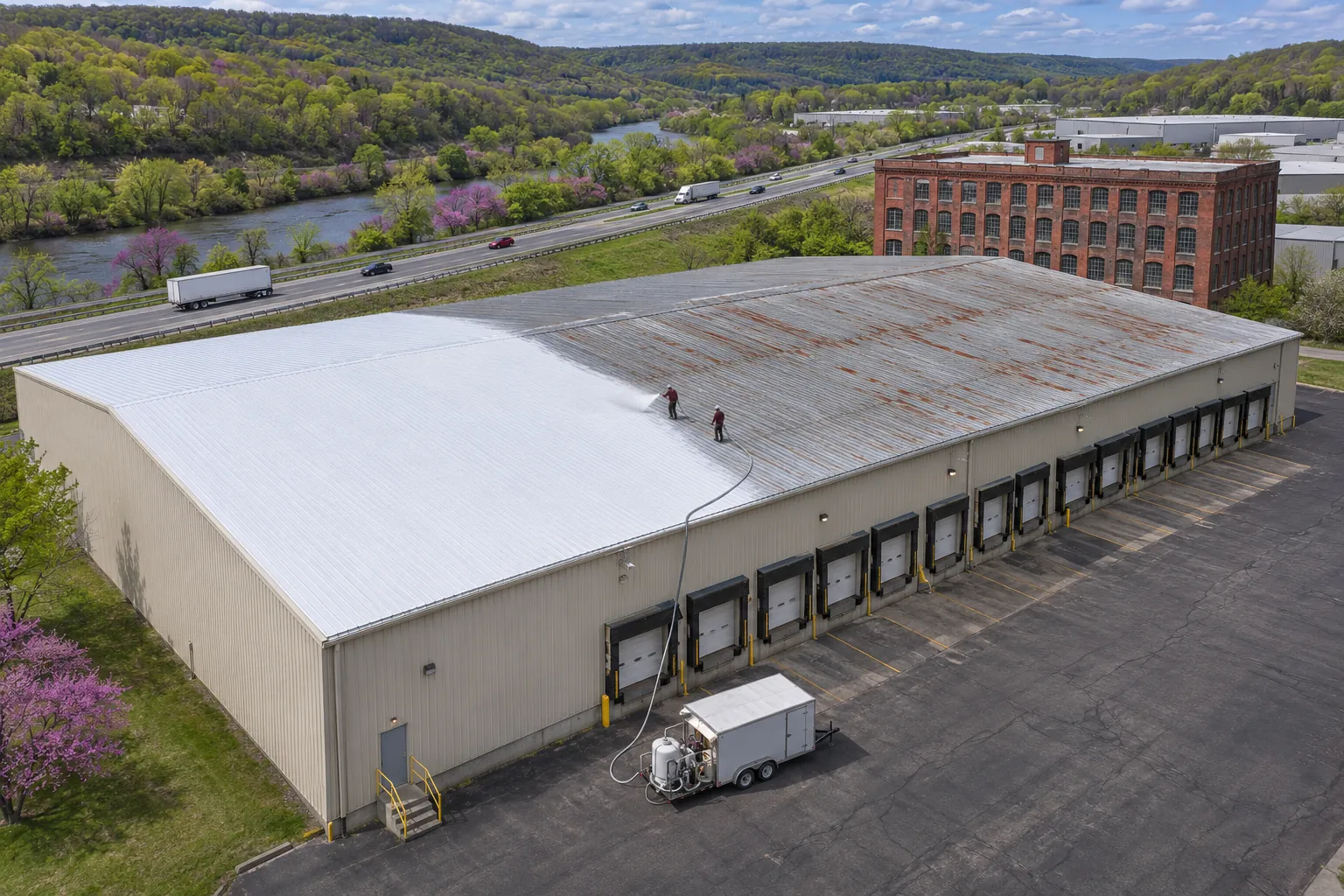
Panels are coated after wet insulation is replaced and leaks at laps and screws are sealed. Panels with underside rust-through are swapped before coating.
Insulation Upgrade
Foam Where The Building Needs Warmth
Buildings with chronic condensation and thin insulation can take spray foam on top, once the assembly is dry. A protective topcoat goes over the foam.
Local Businesses
Metal Roof Coating For Carbondale Businesses
Retail, service, and storage buildings get the same moisture checks as larger plants. The written scope lists each moisture repair.
Nearby Help
Metal Roof Coating Contractor Near Carbondale
Carbondale is part of our regular service area, so inspections are scheduled like any job closer to Scranton. Inspection visits are booked as requests come in.
Water Stains Inside After A Cold Night?
Call us before coating anything. We will help sort out whether the water is a leak or condensation.
Metal Roof Coating Work in Carbondale, Step By Step
Moisture checks set the order of work on every Carbondale job.
Step 1
Inspect Your Roof
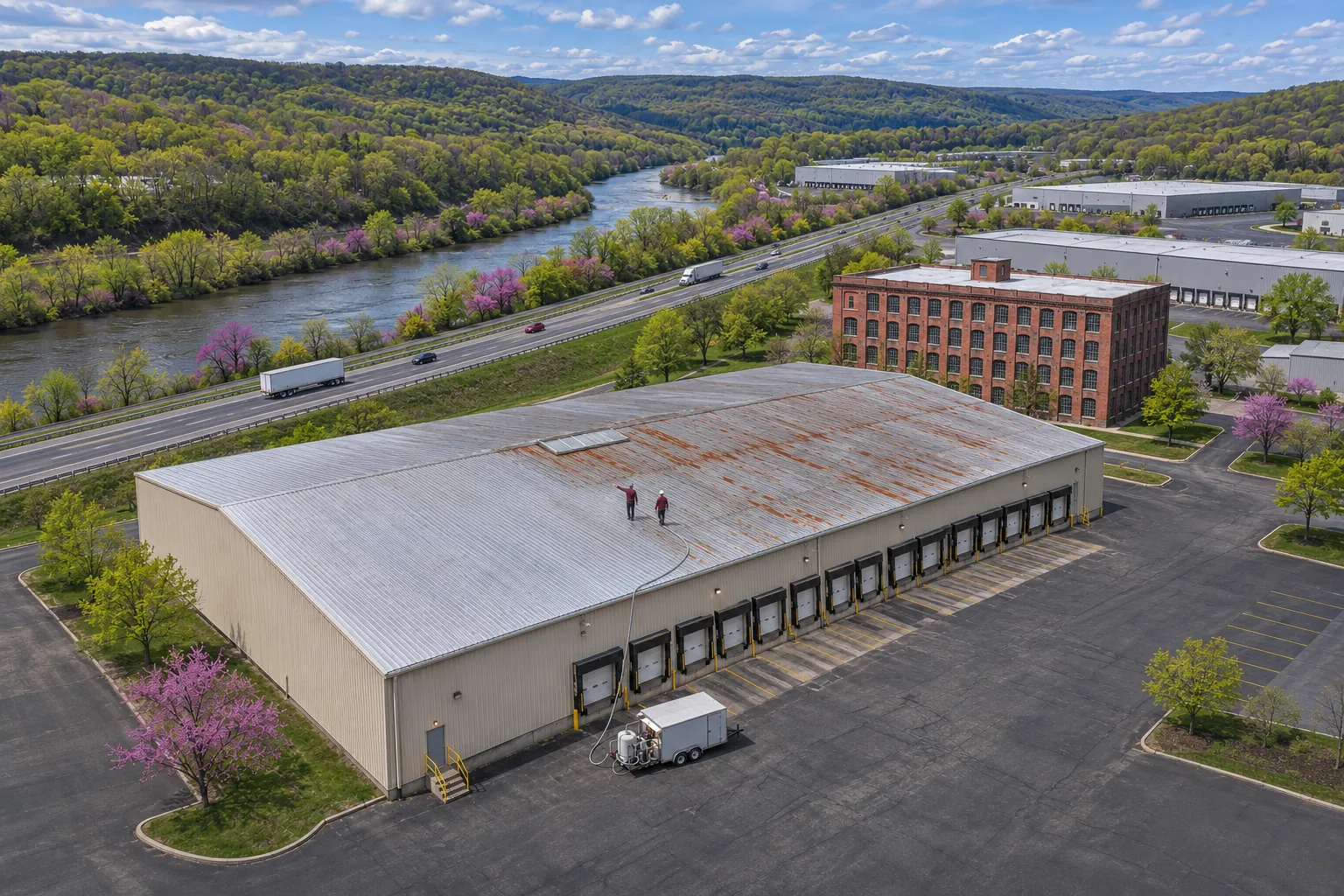
We take moisture readings, look at insulation from inside, and match each stain with the roof above it. Each stain gets matched with a roof location.
Step 2
Fix The Source
Condensation problems go back to the owner with ventilation notes, and real leaks are repaired on the roof. Ventilation notes go to the owner in writing.
Step 3
Replace Wet Material
Soaked insulation and rusted-through panels are replaced so the coating goes over a dry assembly. Removed material is replaced to match the original thickness.
Step 4
Prime And Coat
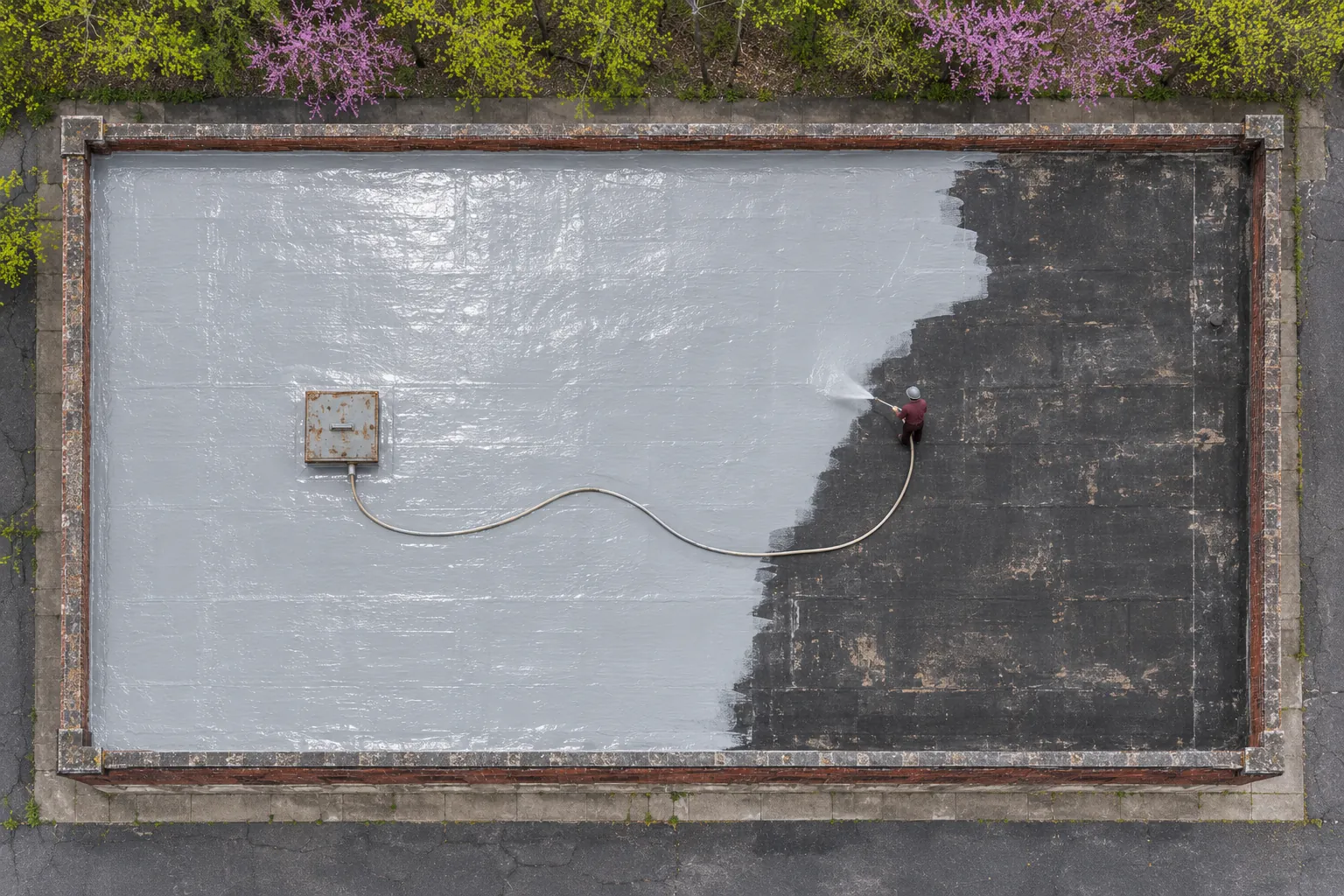
The dry roof is primed and coated at the specified thickness, with extra material at laps and curbs. Readings are logged section by section.
Peeling coatings traced to the cause before recoating.
Metal Roof Coating Questions From Carbondale
Answers for Carbondale property owners.
Moisture
Why Check Moisture Under A Carbondale Metal Roof Before Coating?
Moisture under the panels can mean a leak or condensation, and surface prep fixes neither. We check the wet material and compare its location with exterior defects and interior conditions, then repair before deciding on coating.
The repair list and the coating proposal come together, so you see the full scope at once.
Local Search
Is There Carbondale Metal Roof Coating Near Me?
Yes. Carbondale sits inside the area we cover from Scranton, and its buildings get the same inspection-first process. Distance from Scranton changes little about scheduling, since weather windows set the calendar.
Contractor
How Do I Find A Metal Roof Coating Contractor Near Carbondale?
Call us or request a ballpark estimate online. We schedule an inspection, walk the roof with you, and list the repairs before any coating price. An inspection visit usually takes a few hours on a mid-size building, depending on roof access.
Insulation
Does Wet Insulation Have To Come Out?
It does when readings show it is soaked. Wet insulation holds water against the panels and deck, so it is replaced before coating. Moisture readings mark the soaked areas, and cuts confirm the readings before material is removed.
Winter
Can Repairs Happen In Winter?
Leak repairs and insulation work can happen on dry winter days, while the coating itself waits for warmer, dry weather. Interior work on insulation can continue in cold months when the roof surface stays dry.
Condensation
How Can Condensation Be Told Apart From A Leak?
Timing and location give it away. Condensation drips on cold mornings across wide areas, while leaks follow rain or snowmelt and line up with laps, screws, or curbs. We match the pattern with the roof above and check humidity inside before deciding.
Hire a Carbondale Metal Roof Coating Contractor
Call to have your Carbondale roof checked for moisture, or see a ballpark range for coating.