Spray Foam Roof Over Metal Panels
Panel laps and screws that move in wind would keep flexing under foam and crack it.
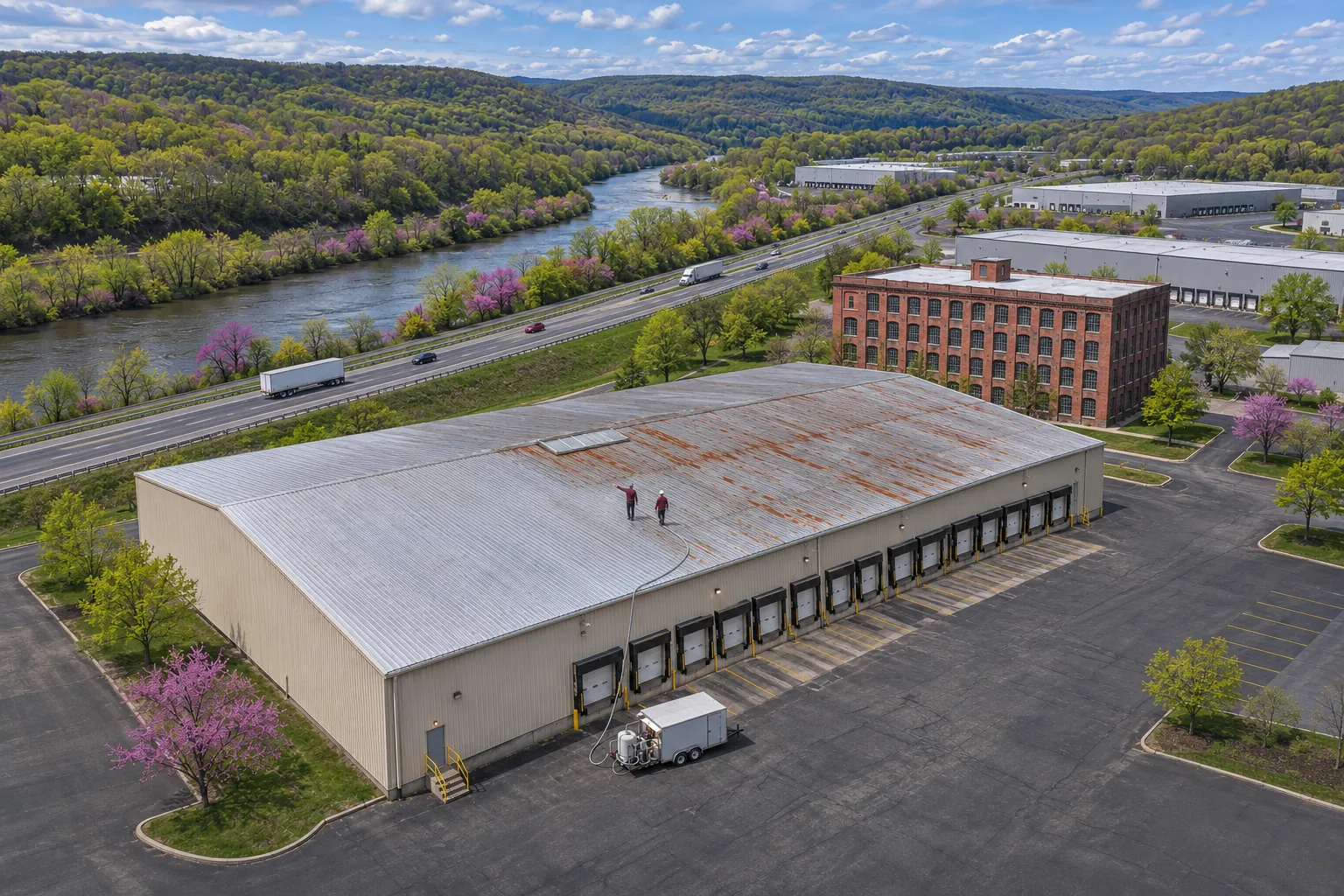
Loose panels are refastened, rusted areas are treated, and the ribs are filled with foam before the field reaches full thickness.
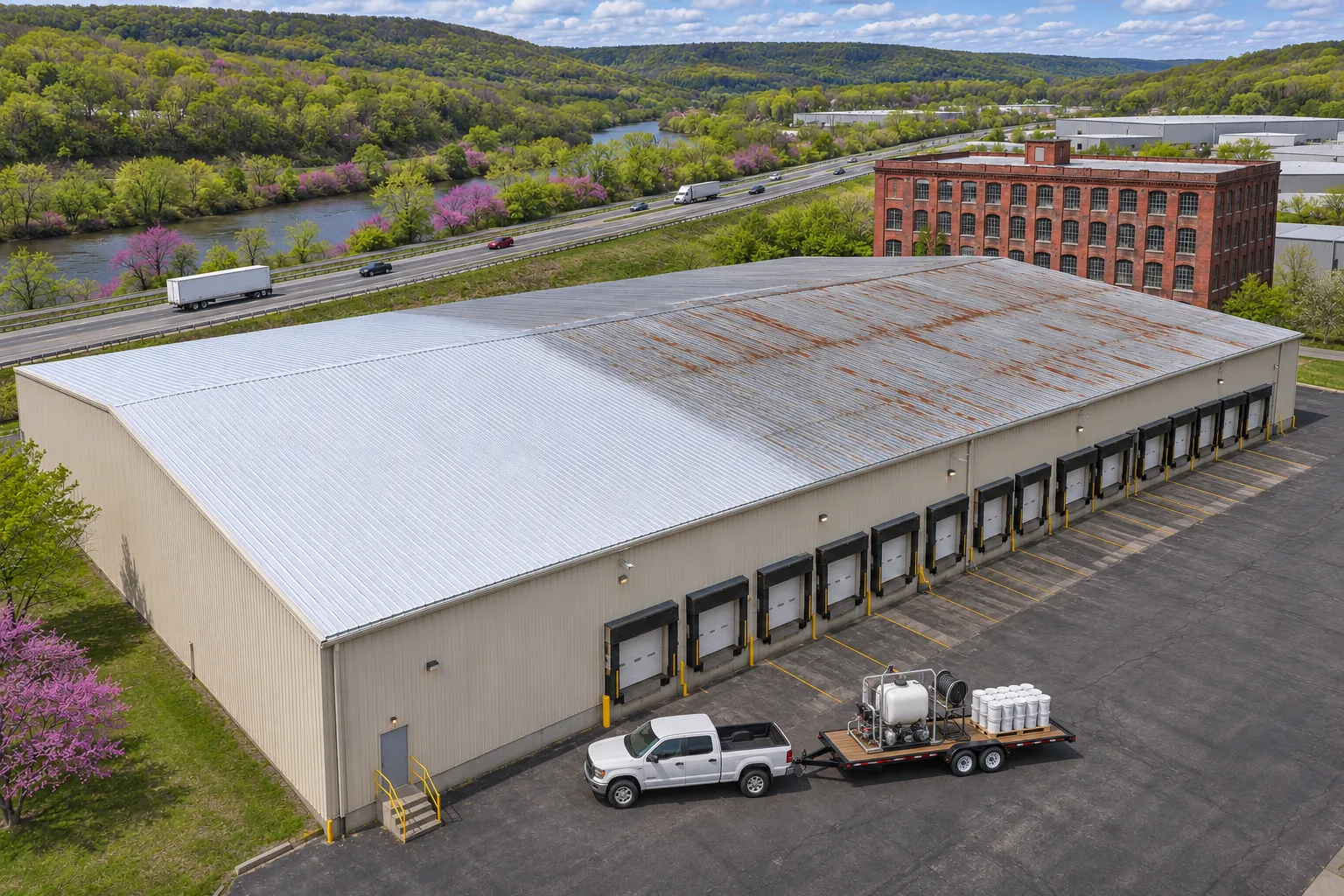
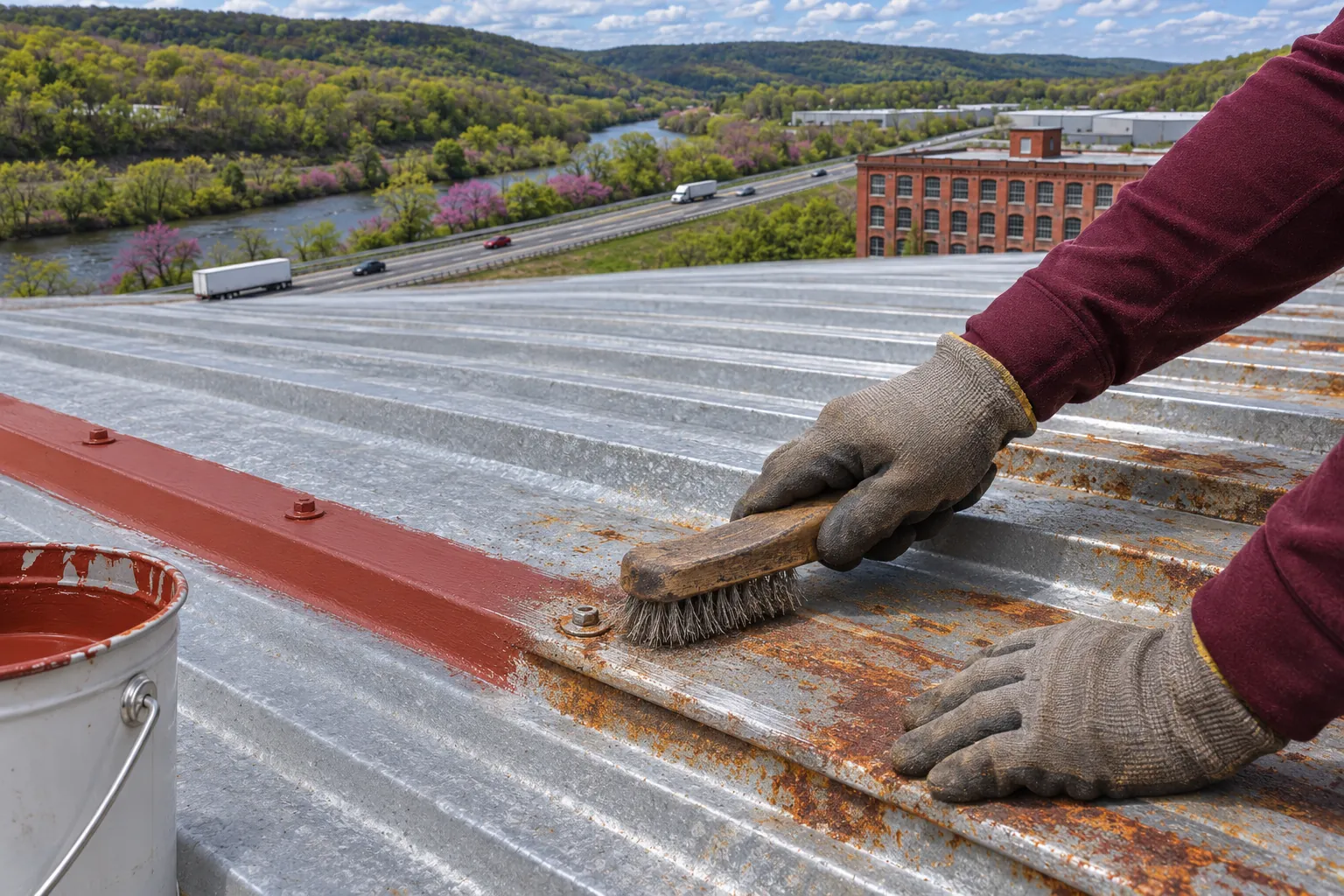
As a Scranton spray foam roofing contractor, we confirm dry, secure substrate, then spray foam to the planned thickness and finish it with a protective coating.
Scranton spray foam roofing goes over roofs that are dry and attached. These details show when foam fits and when the roof needs work first.
| Roof Detail | Ready For Foam | Repair First | Remove First |
|---|---|---|---|
| Attachment | Panels and deck fastened tight | Loose panels to refasten | Deck too weak for added weight |
| Moisture | Dry readings everywhere | Wet sections to cut out | Wet insulation across the roof |
| Surface | Clean metal or firm membrane | Rust or loose gravel to remove | Multiple failed roof layers |
| Edges And Curbs | Flashing height leaves room | Curbs to raise for new thickness | No room at doors or walls |
| Nearby Openings | Intakes can be shut or covered | Openings that need a plan | Operations that cannot pause |
Foam covers everything under it, so these conditions get settled before any spraying starts.
Panel laps and screws that move in wind would keep flexing under foam and crack it.
Loose panels are refastened, rusted areas are treated, and the ribs are filled with foam before the field reaches full thickness.
Warm, damp indoor air reaching a cold roof deck can condense inside the assembly.
We look at ventilation and indoor moisture with the roof, and plan foam thickness and timing so the whole assembly stays dry.
Unknown leak paths and wet materials under foam keep feeding water into the assembly.
Every leak is traced and fixed and wet material is replaced first, because foam over a hidden leak keeps the problem.
Wind carries fine foam particles toward rooftop units, vehicles, and fresh-air intakes.
Intakes are shut down or covered, wind is monitored, and work areas are screened before each spray pass.
Foam is a roofing system plus a coating. These are the main ways it goes on here, with a cost note.
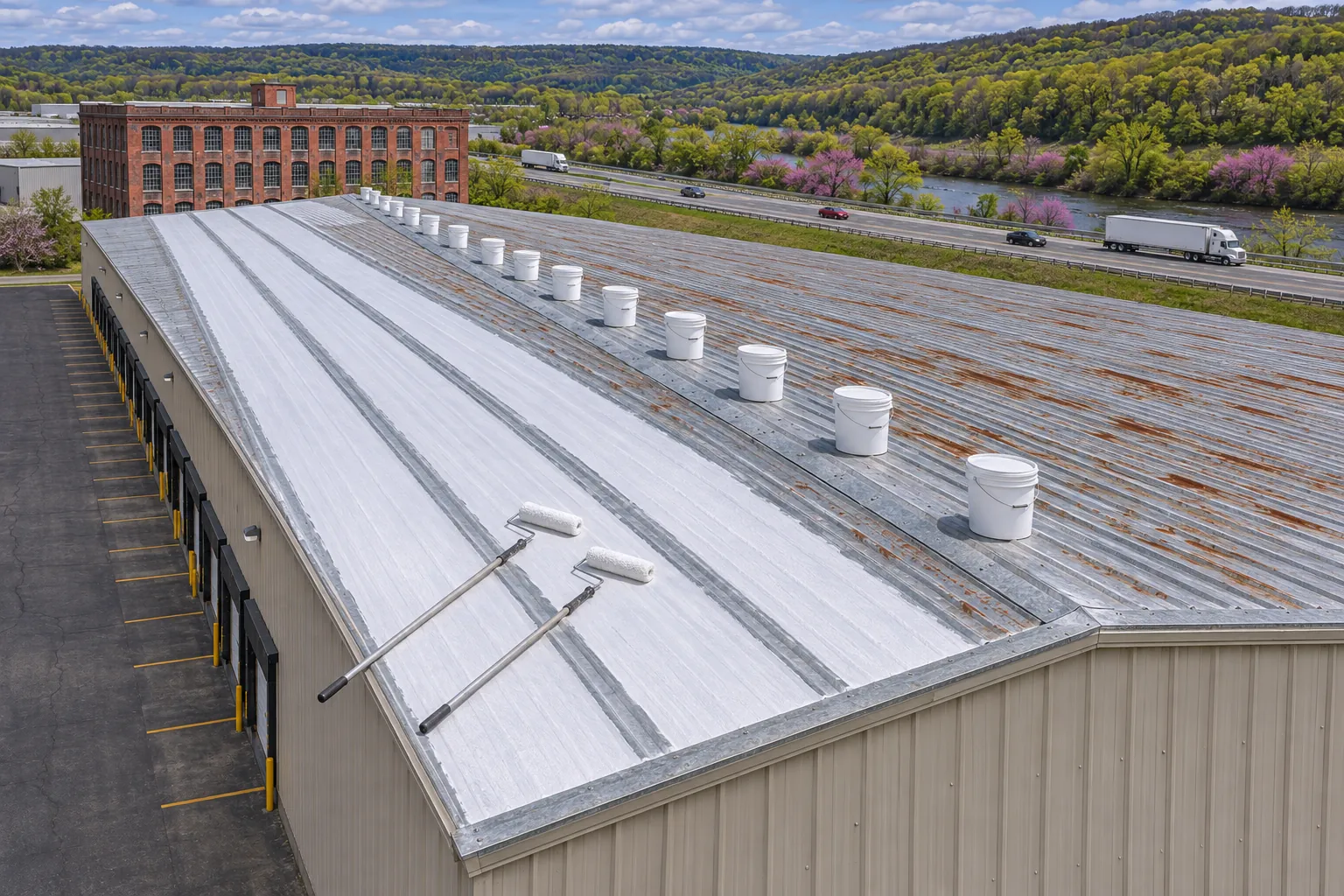
Secured metal roofs get foam that fills the ribs and adds insulation, then a protective coating over the whole surface. Ribs are filled before the field reaches full thickness.
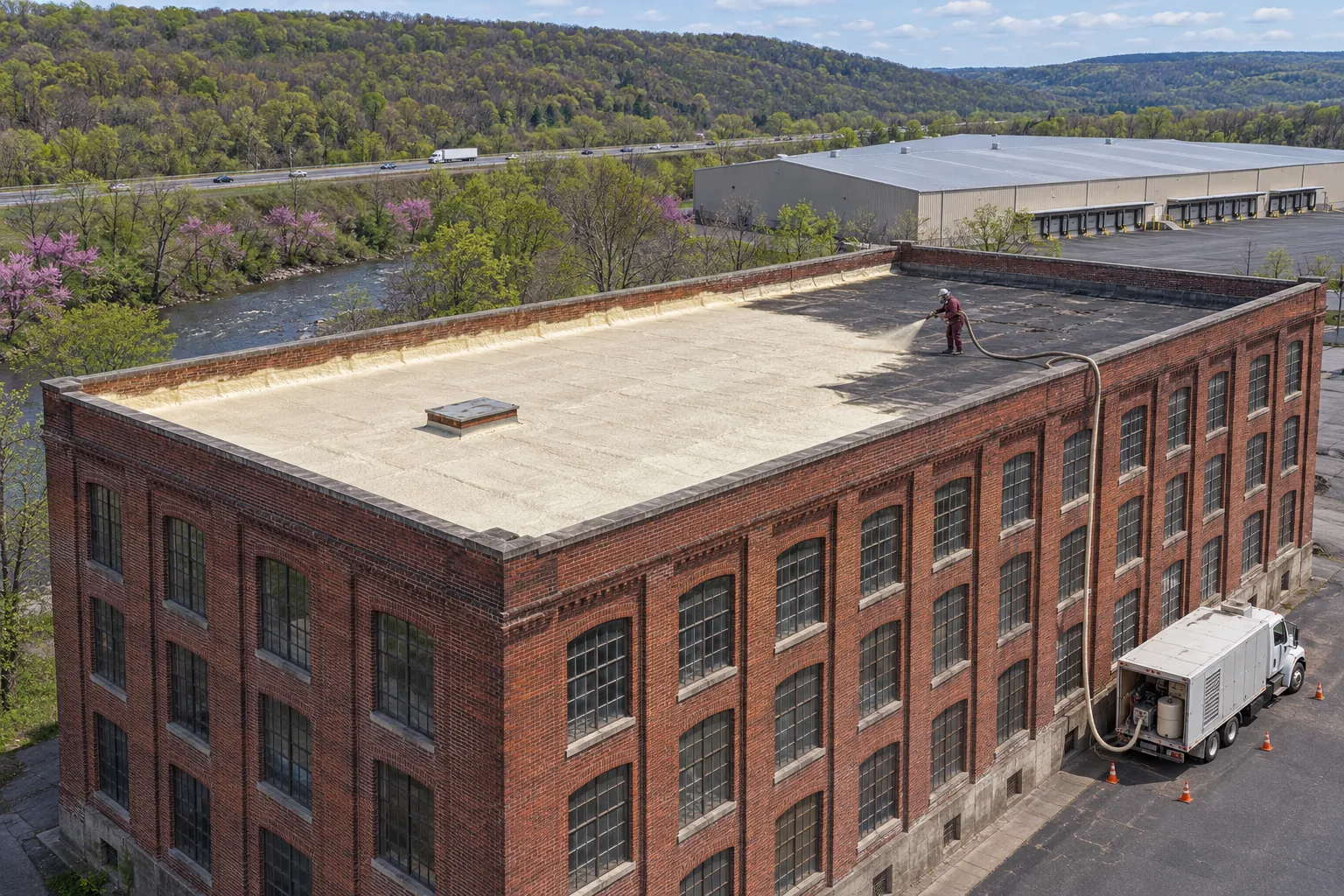
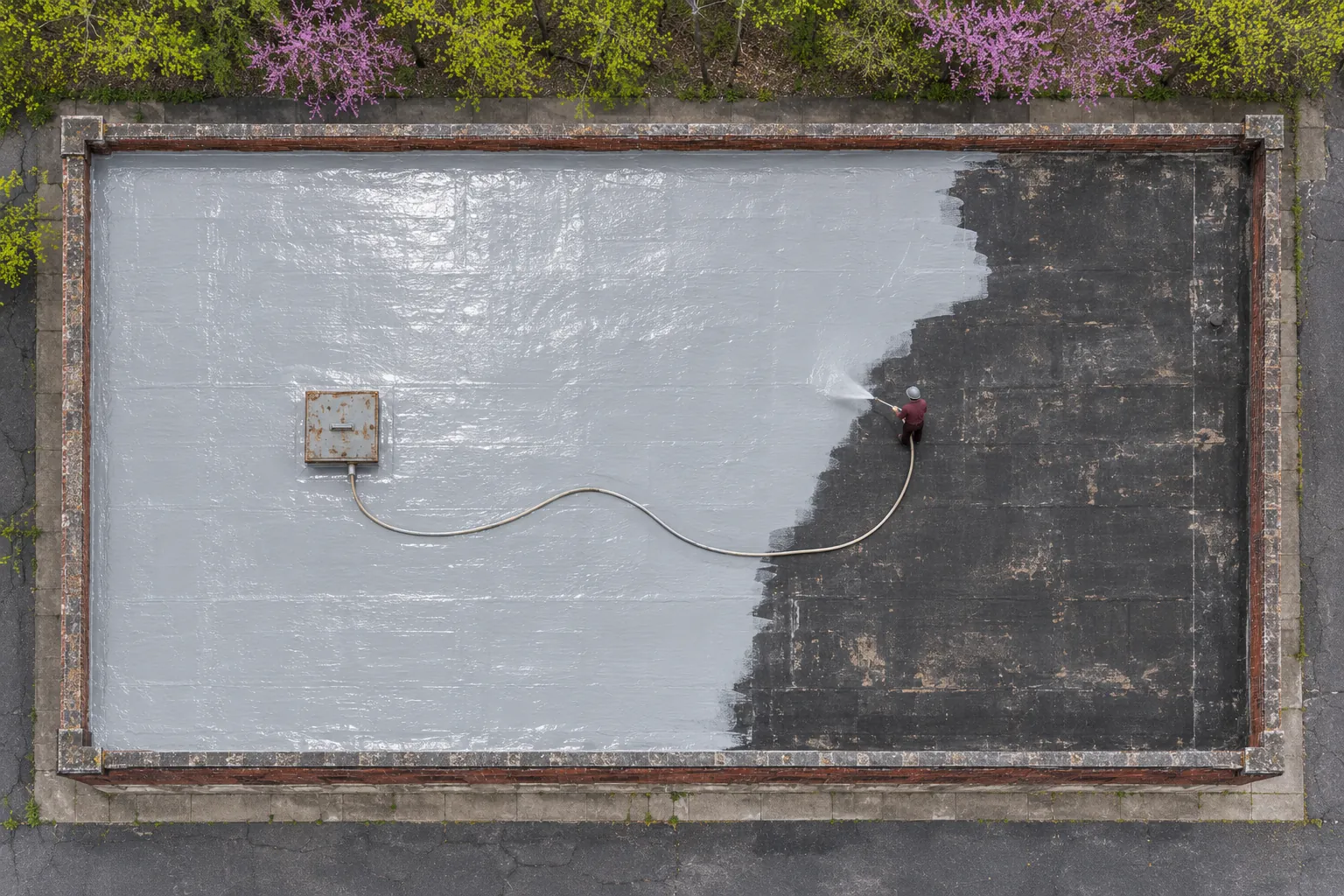
Dry, attached built-up or single-ply roofs can be cleaned and foamed instead of torn off, with curbs and edges raised to fit. Wet sections are cut out and replaced first.
The coating portion plans at about $2.50 to $4.00 per square foot, with replacement near $5 to $8. Foam thickness and substrate repairs are priced on top. Edges and curbs often need raising for the new height.
Foam roofs with a worn topcoat are cleaned, damaged foam is cut out and filled, and a new coating protects the surface. Worn topcoats show as chalking and exposed foam.
A foam roof with a sound topcoat adds insulation and a continuous waterproof layer in one job.

Foam adds rigid insulation over the existing roof, which can reduce heat loss through the deck in a Scranton winter.
Sprayed foam forms one continuous surface, so laps and seams in the field stop being leak points.
Dry, attached roofs stay in place under the foam, keeping old material out of a dumpster and the building covered.
Extra thickness can be built up in low areas to help water move toward drains instead of sitting on the roof.
Call us to look at the panels, the moisture underneath, and whether foam insulation on top makes sense for the building.
Foam work moves in four steps, and the first two decide whether the roof is ready for it.
We check attachment, take moisture readings, cut test spots, measure flashing heights, and note intakes and openings near the roof.
Wet material is replaced, panels are refastened, rust is treated, and curbs and edges are raised where the new thickness needs room.
Foam goes on in passes to the planned thickness, with wind, surface moisture, and temperature checked before each pass.
A protective coating goes over every inch of foam as soon as the product allows, before sunlight can start breaking down the surface.
When foam is more than the roof needs, one of these usually fits.

Metal roofs with good insulation underneath often need only the metal repair and coating scope.
Scranton Commercial Metal Roof CoatingFlat roofs with dry insulation and slow drainage can take silicone without foam.
Scranton Silicone Roof Coating
Well-drained pitched metal roofs get a bright acrylic finish at a lower material cost.
Scranton Acrylic Roof Coating
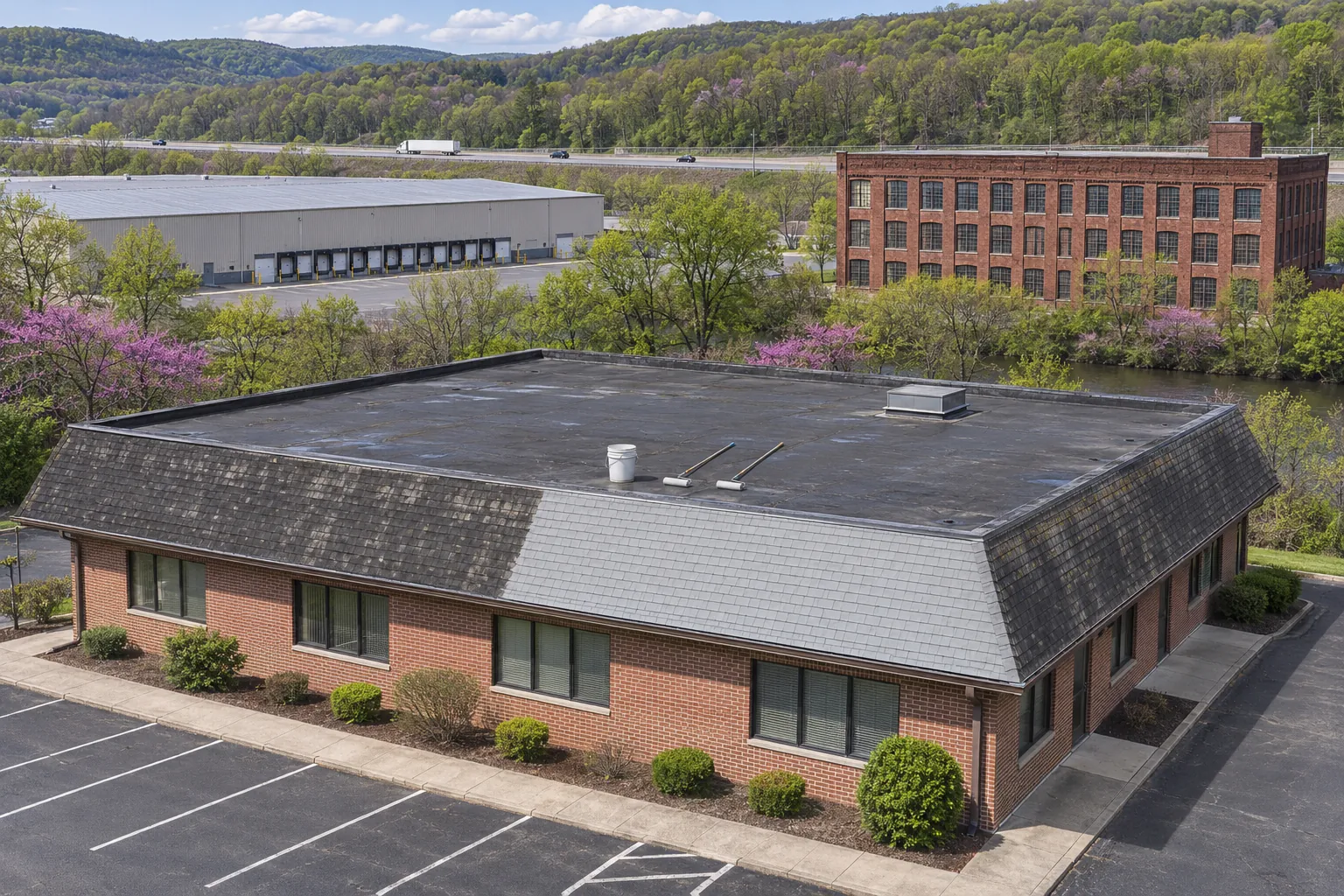
Shingle mansards and entry roofs on mill buildings follow their own coating check.
Scranton Shingle Roof CoatingAnswers about foam on commercial roofs here.
It should never be counted on for that. We confirm attachment, metal condition, and dryness before foam goes over the existing roof, and the job includes flashing and a protective coating, with repairs where the original panels fall short.
Air leakage, ventilation, and indoor moisture through the whole roof assembly. We check for condensation and wet materials first, plan for application weather and future topcoat upkeep, and avoid treating foam thickness alone as proof of an energy result.
It covers the coating, at about $2.50 to $4.00 per square foot, with replacement near $5 to $8 as a comparison. Foam thickness and any substrate repairs are assessed and priced separately in the proposal.
The topcoat protects the foam from sunlight, so it is inspected for wear, cuts, and bird damage, and recoated when the film thins. Damaged foam is cut out and refilled before recoating. Small damaged spots are repaired as they are found during routine inspections.
Yes, with planning. Intakes are shut or covered, doors and vehicles near the work are protected, and spraying stops when wind picks up. Work near doors and parking areas is scheduled for quieter hours where the building allows it.

Get a ballpark coating range for your roof size, or call to have the substrate and moisture checked first.