
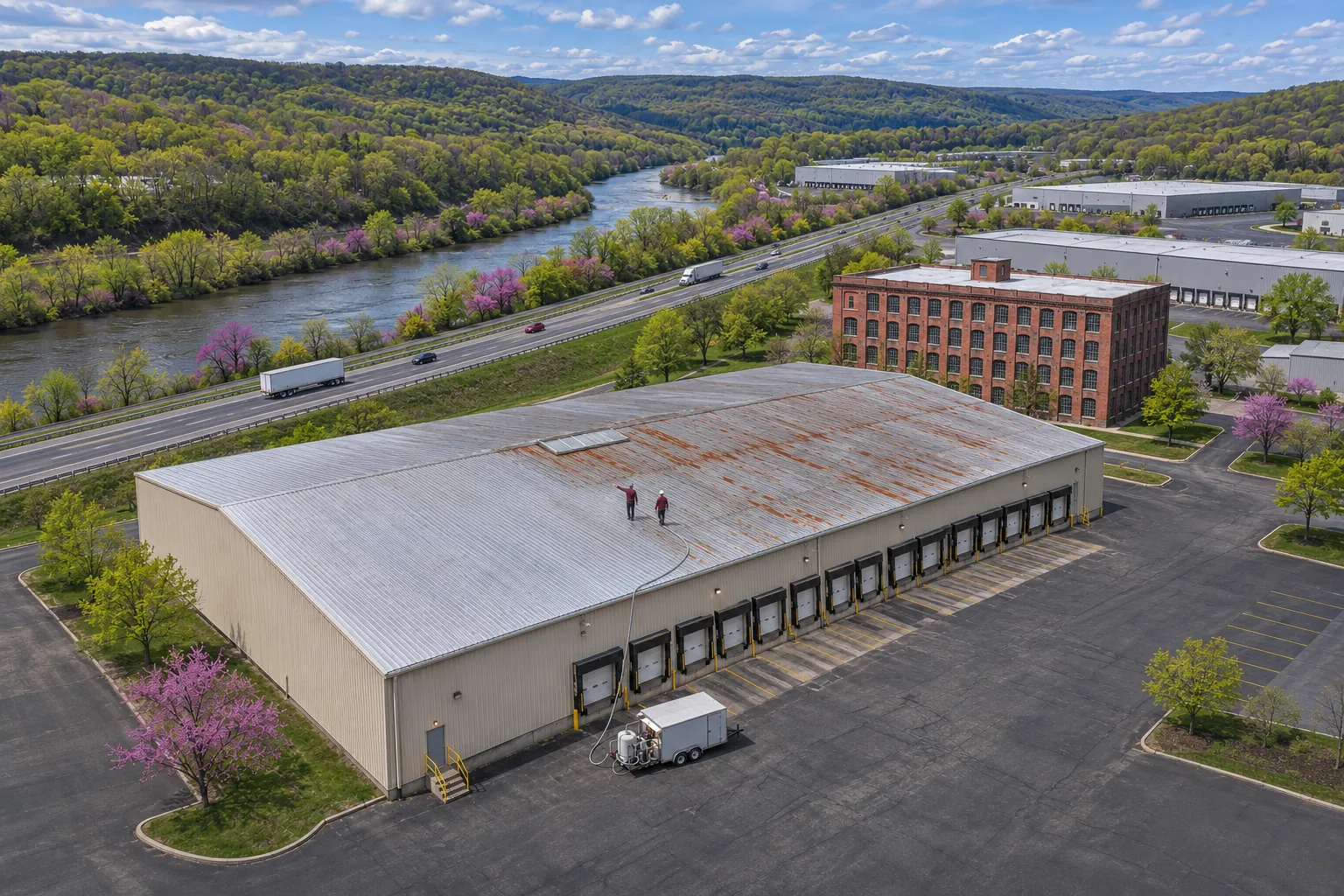
Rust-streaked metal warehouse roof in a river valley with two people walking the panels
Owner Questions

Scranton Metal Roof Coating FAQ

Plain Answers On Rust, Seams, Systems, Weather, And Cost

This Scranton metal roof coating FAQ answers 30 questions building owners ask about preparing, choosing, and maintaining a coated commercial roof.

  • 30 Questions Answered
  • Eight Topics
  • Code Source Listed

Scranton Metal Roof Coating FAQ Topics

Jump to a topic in the Scranton metal roof coating FAQ, from preparation and coating systems to town projects.

Assessing A Coating Project

Can commercial pole barns be coated without overlooking moisture underneath?

Commercial pole barns need moisture conditions beneath the metal investigated before coating is selected. We examine condensation, ventilation and any wet insulation alongside rust and fastener defects.

A suitable exterior finish may protect prepared panels, but it cannot resolve an indoor moisture source or recover strength lost through underside corrosion.

What should prompt a Scranton owner to investigate recoating?

Worn film, lifting patches or recurring leaks should prompt inspection before a Scranton owner selects recoating. We assess the remaining bond and the condition of metal beneath questionable areas.

Another layer should follow necessary preparation and repairs, rather than hide deterioration or assume that coating age alone establishes the required work.

How should a warehouse owner budget for metal roof coating?

Coating planning prices are about $2.50 to $4.00 per square foot of roof, compared with about $5 to $8 per square foot for replacement. We evaluate size and access, rust and seam preparation, fastener sealing, coating type and thickness, number of coats, penetrations and flashing.

A warehouse inspection determines which preparation and details belong in the scope rather than establishing a building total from area alone.

Does a distribution warehouse need every roof leak traced before coating?

A distribution warehouse needs known leakage investigated before coating so the underlying defects can be repaired. We compare interior locations with laps, fasteners and equipment penetrations, then assess affected materials.

A finish should be applied to a suitable assembly, not selected as a substitute for understanding water entry beneath earlier patches.

Commercial Metal Preparation

Can exposed roof screws be sealed without checking their attachment?

Exposed screws need their attachment checked before sealing because loose fixings or enlarged holes can continue moving beneath a finish. We examine washers, surrounding metal and the support receiving the fastener.

Suitable repair and sealing come before coating, so the weatherproof detail does not depend on an unreliable mechanical connection.

Should hail-damaged laps be repaired before coating a Scranton roof?

Hail-damaged laps need assessment and suitable repairs before a Scranton roof receives coating. We inspect opened joints, punctures and affected flashings, including any damage from accompanying summer winds.

The finish cannot restore split metal or secure loose components, so the repair scope should be settled before surface application proceeds.

Why does preparation matter in a commercial coating price per square foot?

Preparation determines what work fits the coating range of about $2.50 to $4.00 per square foot of roof; replacement is about $5 to $8 per square foot.

We assess roof size, access, rust and seam work, fastener sealing, coating type, thickness, coat count, penetrations and flashing. A seemingly simple panel area can still need detailed repairs before the specified finish is appropriate.

Silicone Systems

Does silicone’s water tolerance remove its maintenance drawbacks?

Silicone’s suitability for some standing-water conditions does not remove maintenance concerns such as wet-surface access, dirt accumulation or repair compatibility. We investigate drainage and existing materials before selecting the product.

The coating cannot change roof slope or correct wet components beneath it, so those conditions still need attention in the proposed work.

What should cold-weather silicone application consider beyond the air forecast?

Cold-weather application needs the actual metal surface and curing period checked against the silicone specification. We inspect shaded areas for frost, dew and retained moisture that may differ from the air forecast.

A suitable application window must support preparation and curing, not simply provide a mild interval while material is placed.

Which roof details influence a silicone coating price?

Silicone pricing follows the prepared roof and specified application rather than the product name alone. The coating comparison is about $2.50 to $4.00 per square foot of roof, versus about $5 to $8 per square foot for replacement.

We account for roof size, access, rust and seam preparation, fastener sealing, coating type, thickness, number of coats, penetrations and flashing when defining the scope.

Acrylic Systems

Can overnight cooling affect acrylic drying in spring or fall?

Overnight cooling can affect whether acrylic has a suitable drying window during spring or fall. We follow the product’s air and surface temperature requirements and consider humidity, dew and rain between applications.

The work should be scheduled for conditions through curing, rather than judged only by the warmest part of the day.

What should a price for acrylic roof coating cover?

An acrylic scope should cover preparation and the specified film, using about $2.50 to $4.00 per square foot of roof for coating and about $5 to $8 per square foot for replacement as planning comparisons.

We evaluate size, access, rust and seams, fastener sealing, coating type, thickness, coats, penetrations and flashing. Drying conditions and drainage suitability must also be established before application is selected.

When can acrylic be a poor fit for an existing metal roof?

Acrylic can be a poor fit where persistent moisture, unsuitable drainage or an inadequate drying window conflicts with the product requirements. We inspect low areas, existing finishes and surface condition before choosing the system.

The initial coating price should not drive selection when the prepared roof cannot support the proposed material properly.

Spray Foam Roofing

Will a foam overlay solve leaks in loose metal panels?

A foam overlay should not be expected to correct loose panels or unidentified leaks. We establish secure attachment, suitable metal condition and dryness before considering installation over the existing roof.

The assembly also needs proper flashing and a protective coating, with repairs completed where the original panels cannot provide a sound base.

What should winter insulation planning consider before adding spray foam?

Winter insulation planning needs to consider air leakage, ventilation and indoor moisture through the whole roof assembly. We investigate condensation and wet materials before deciding how spray foam would fit.

The proposal must also account for suitable application conditions and future protective maintenance, without treating foam thickness alone as proof of a particular energy benefit.

Does a coating allowance include all work needed for spray foam roofing?

A coating allowance does not define the complete foam assembly. Coating is about $2.50 to $4.00 per square foot of roof, with about $5 to $8 per square foot as the replacement comparison.

We consider size, access, rust and seam preparation, fastener sealing, coating type, thickness, coats, penetrations and flashing. Foam thickness and any substrate repairs require separate assessment within the proposed work.

Commercial Shingle Roofs

Can shingle coating work without confirmed product compatibility?

Shingle coating should not be selected without explicit compatibility and application guidance for the actual products. We inspect the existing shingles and flashing alongside that information to determine whether treatment is appropriate.

A material that works on metal or another membrane does not establish suitability for commercial asphalt shingles.

What should a church consider before coating an aging shingle roof?

A church should consider shingle deterioration, ventilation and flashing condition before discussing coating. We also assess access around entrances and confirm whether the products support the proposed application.

Treatment cannot restore brittle or missing shingles, so the roof may require replacement work even where some surface areas still appear intact.

Can asphalt roof coating provide a promised service-life extension?

Asphalt shingle coating cannot establish a promised service-life extension for a deteriorating commercial roof. We examine cracks, granule loss and moisture beneath the covering before considering any supported treatment.

The condition of shingles, flashing and deck controls what remains useful, rather than a claim based on the appearance of a new surface layer.

Weather, Upkeep, And Occupied Work

How can frozen drainage affect coated roofing during snowmelt?

Frozen drainage can hold snowmelt against vulnerable laps or roof edges beneath a coating. We inspect gutters, outlets and joints exposed to freeze-thaw movement when roof access is safe.

Heavy wet snow also requires attention to structural loading concerns, which cannot be resolved by assessing the condition of the surface finish alone.

Could a brick silk mill’s humidity problem be mistaken for roof failure?

Humidity can cause condensation that resembles roof failure inside a brick silk mill. We compare indoor conditions with rain-related staining and inspect insulation, panel undersides and wall flashing.

A coating proposal should address confirmed exterior defects rather than assume that a new finish will correct moisture generated within the building.

Can coating work be staged around an occupied retail center?

Coating work may be staged around occupied retail space when access, preparation and application exposure are planned with the operator. We review entrances, air intakes and areas beneath necessary roof openings.

Some activities may need temporary separation, so the sequence should reflect the actual work rather than promise every tenant area remains unaffected.

What maintenance helps preserve a coating after installation?

Maintenance should keep outlets clear and identify damage at service routes, seams and flashing before it develops further. We compare those conditions with earlier inspection records to distinguish new defects from ongoing movement.

A coating remains dependent on the roof underneath, so upkeep should not be reduced to cleaning the visible finish.

Should silicone and acrylic be compared against the same roof conditions?

Silicone and acrylic should be compared against the actual drainage, existing finishes and maintenance needs of the roof. We assess compatible preparation and application windows for each proposed system.

The decision should explain why a material fits those conditions, rather than claim that one coating is universally suitable or longest-lasting.

Does a Scranton coating scope need to identify planned panel replacements?

Planned panel replacements belong in a Scranton coating scope because they describe construction beyond surface application. We identify their locations and any support concerns before seeking project-specific direction from the reviewing authority.

The statewide code framework in Pennsylvania is the UCC, so our inquiry presents both the retained assembly and the components that will change.

Town Project Questions

Can a Dunmore warehouse coating project retain old repaired seams?

Old repaired seams on a Dunmore warehouse need bond and movement checks before they are retained beneath coating. We inspect adjoining metal and identify incompatible or loose patch materials.

The scope should leave suitable connections for the selected system, rather than assume a previous repair is reliable because it has remained in place.

Why check moisture beneath a Carbondale commercial metal roof before coating?

Moisture beneath a Carbondale metal roof can reveal leakage or condensation that surface preparation will not resolve. We assess the affected material and compare its location with exterior defects and interior conditions.

Coating should follow necessary repairs and a suitability decision, rather than conceal wet components under a renewed finish.

Do roof vents in Old Forge need separate preparation before coating?

Roof vents in Old Forge need preparation suited to their flashing, movement and surrounding surface condition. We inspect failed seals, corrosion and exhaust contamination before defining the coating detail.

Equipment operation and later access also matter, so the completed work should remain practical to inspect and maintain around each opening.

What might prevent an Archbald equipment roof from accepting a new coating?

Weak metal, unsuitable old finishes or unreliable attachment can prevent an Archbald equipment roof from accepting coating as proposed. We inspect those conditions and moisture beneath suspect areas before selecting preparation.

Necessary panel or support-related work should be identified first, because coating cannot turn an unsound assembly into a suitable base.

Should peeling areas on a Blakely roof be covered with another coat?

Peeling areas on a Blakely roof need their adhesion failure investigated before another coat is applied. We check the surrounding finish and metal to determine how far preparation must extend.

A new surface should not depend on loose existing material, especially where corrosion or moisture remains hidden beneath the failed layer.

Question About Your Own Roof?

Call us with what you see on the roof or the ceiling below it, and we will talk through what to check first.

Sources For Local Code Answers

The permit answer cites the statewide building code framework for Pennsylvania.

Still Have A Scranton Metal Roof Coating FAQ?

Call with your question, or get a ballpark range for coating your roof.

Call Us(570) 816-4569