Metal Roof Coating Services in Scranton
Which System Fits A Rusted Panel, A Flat Deck, Or A Shingle Face?
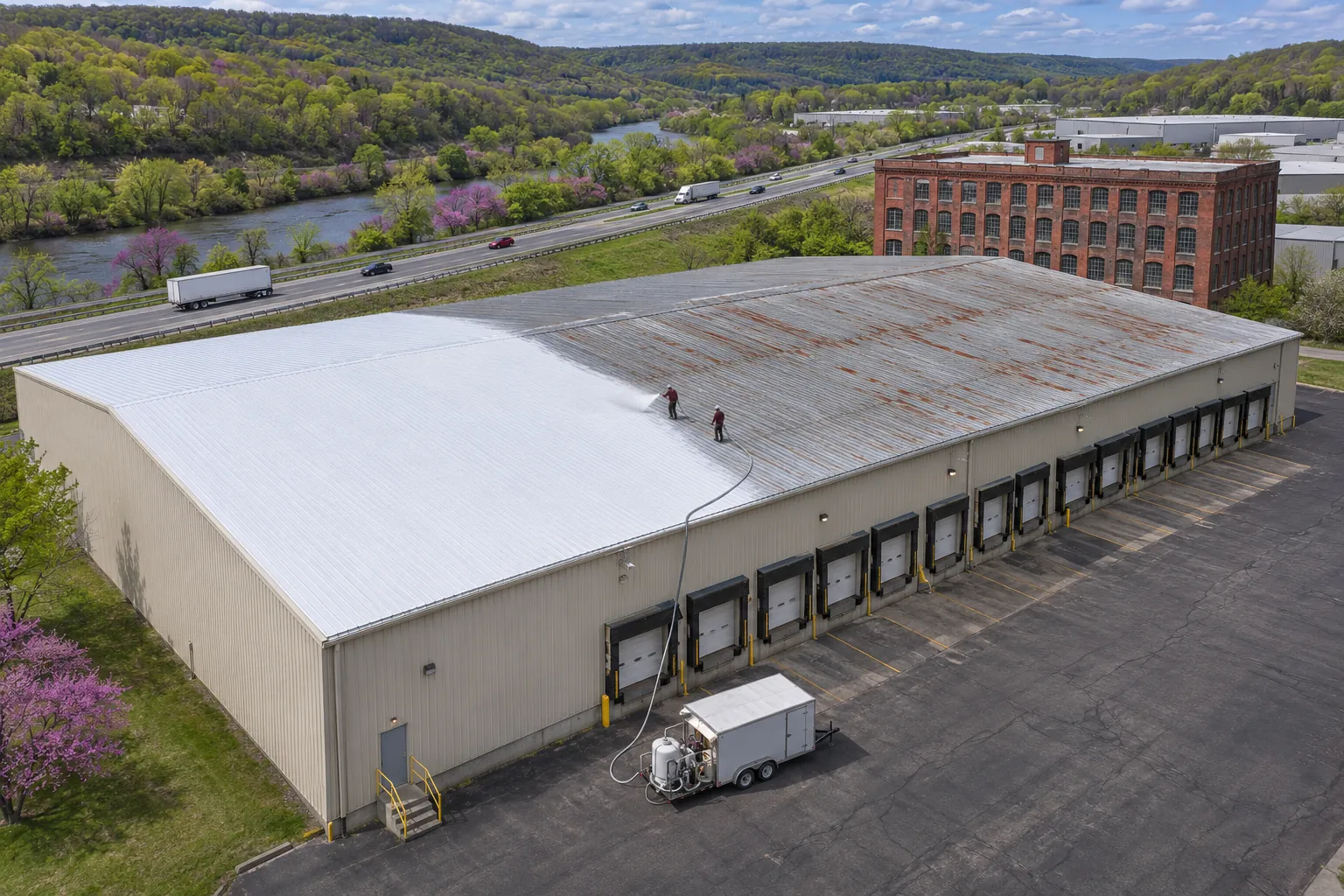
We offer metal roof coating services in Scranton for metal, low-slope, foam, and shingle commercial roofs, and each one starts with an inspection of the existing roof.
- Five Systems, One Inspection
- Repairs Listed Before Coating
- Work Staged Around Operations
Our Metal Roof Coating Services in Scranton
These metal roof coating services in Scranton cover every roof type we coat. Compare each system, then open its own section for preparation steps, cost notes, and common questions.

Silicone Roof Coating

Acrylic Roof Coating

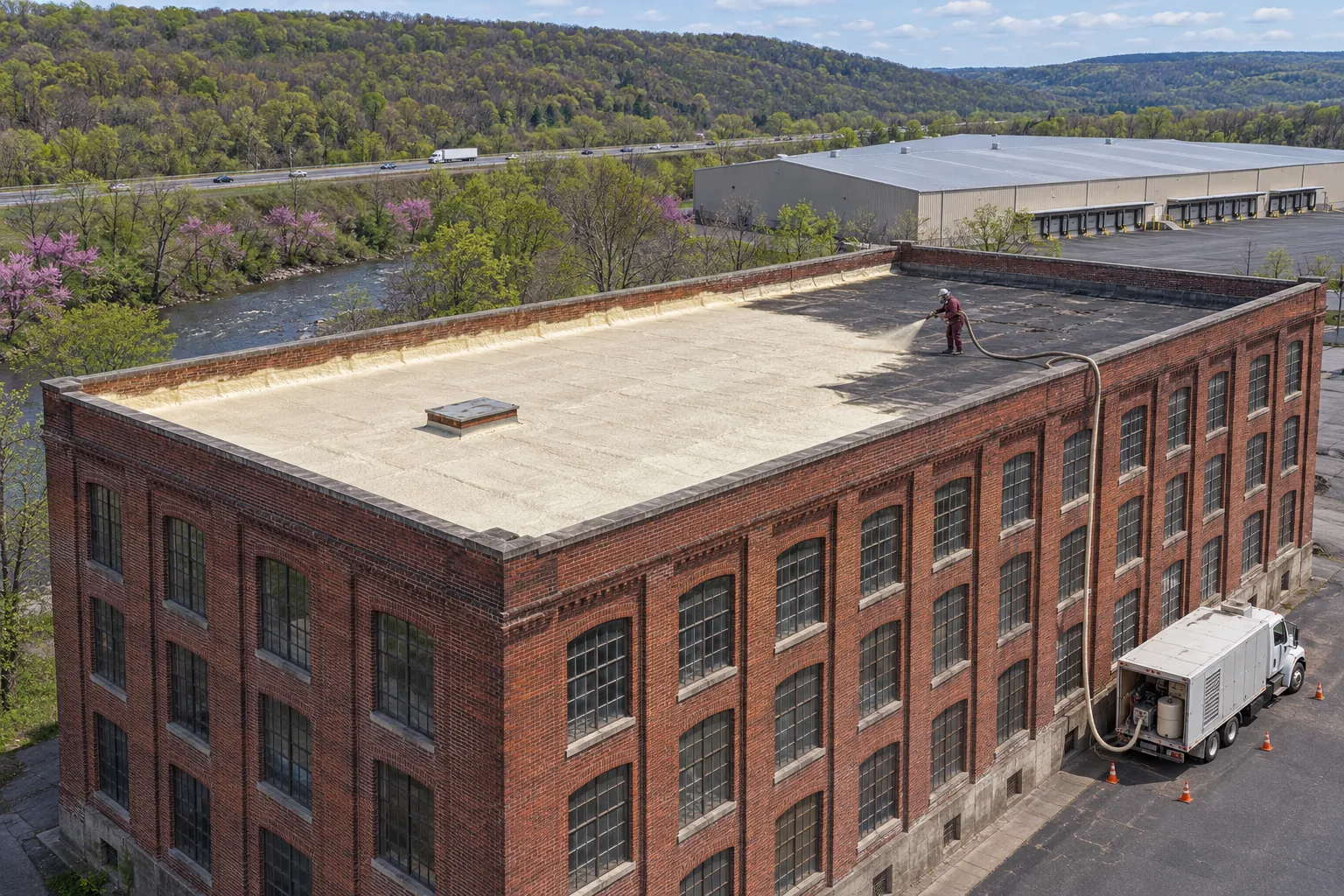
Spray Foam Roofing

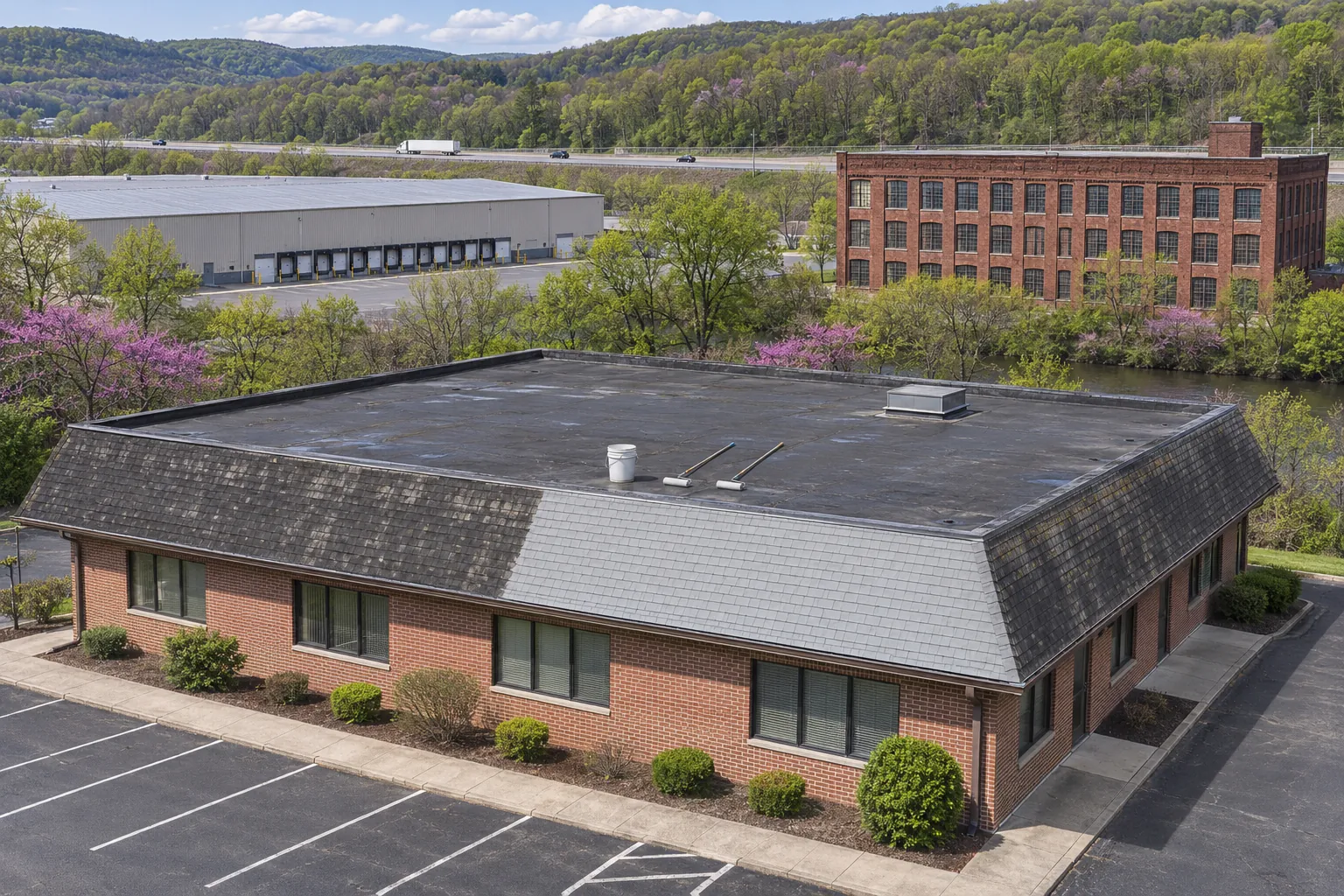
Shingle Roof Coating
Which Metal Roof Coating Service Fits My Building
Each system answers a different roof condition. Read across a row to compare them on one factor, and use the last two rows to see which systems add insulation and where each is common.
| Roof Factor | Metal Coating | Silicone | Acrylic | Spray Foam | Shingle Coating |
|---|---|---|---|---|---|
| Roof Type | Steel panels | Flat or low-slope | Pitched panels | Flat or metal | Asphalt shingles |
| Standing Water | Pitched, drains fast | Tolerates shallow ponds | Needs fast drainage | Can be built up to drain | Steep, drains fast |
| Weather Window | Dry, mild days | Dry surface, above dew point | Warm, dry, no dew | Dry, low wind | Dry, mild days |
| Later Recoats | Same system family | Silicone only | Acrylic over acrylic | Topcoat renewal | Per maker guidance |
| First Prep Step | Screws and laps | Moisture survey | Drainage check | Attachment and dryness | Compatibility check |
| Adds Insulation | No | No | No | Yes, with thickness | No |
| Common Building | Warehouses, shops | Flat plants, offices | Metal warehouses | Brick mills, plants | Churches, offices |
Not Sure Which Roof You Have?
Call us with the building address and what you see from the ground. A few questions usually narrow it down before the inspection.
From Inspection To Final Coat
Every system follows the same order of work, even when the materials differ.
- Step 1
Inspect Your Roof
We note the roof type, slope, drainage, seams, fasteners, and moisture, and photograph each problem area for the written scope. The report also marks where water stays after rain. Moisture readings mark any wet insulation.
- Step 2
Choose The System
The roof condition points to metal coating, silicone, acrylic, foam, or a shingle coating, and the reason is written into the proposal. Each reason ties back to a roof condition we found. Weather windows for the system are noted too.
- Step 3
Prepare The Surface
Repairs come first, then washing, rust treatment, primer, and seam reinforcement suited to the chosen system. Repairs are listed so you can see what each one adds. Seam fabric goes into the base coat where needed.
- Step 4
Apply And Record
Coatings go on at specified thickness, readings are logged, and you get a record of conditions for later inspections. Readings show each section reached its specified thickness. You keep a copy for future maintenance checks.
Questions About Choosing A Coating
How owners usually narrow the choice.
Should Silicone And Acrylic Be Compared On The Same Roof?
Yes, against the same drainage, existing finish, and upkeep needs. We look at preparation and weather windows for each, and the proposal explains why one fits the roof instead of calling either one best everywhere.
Roofs that hold water after rain usually point to silicone, while fast-draining pitched roofs suit acrylic. Both choices still start with screws, laps, and moisture.
Can One Building Use Two Systems?
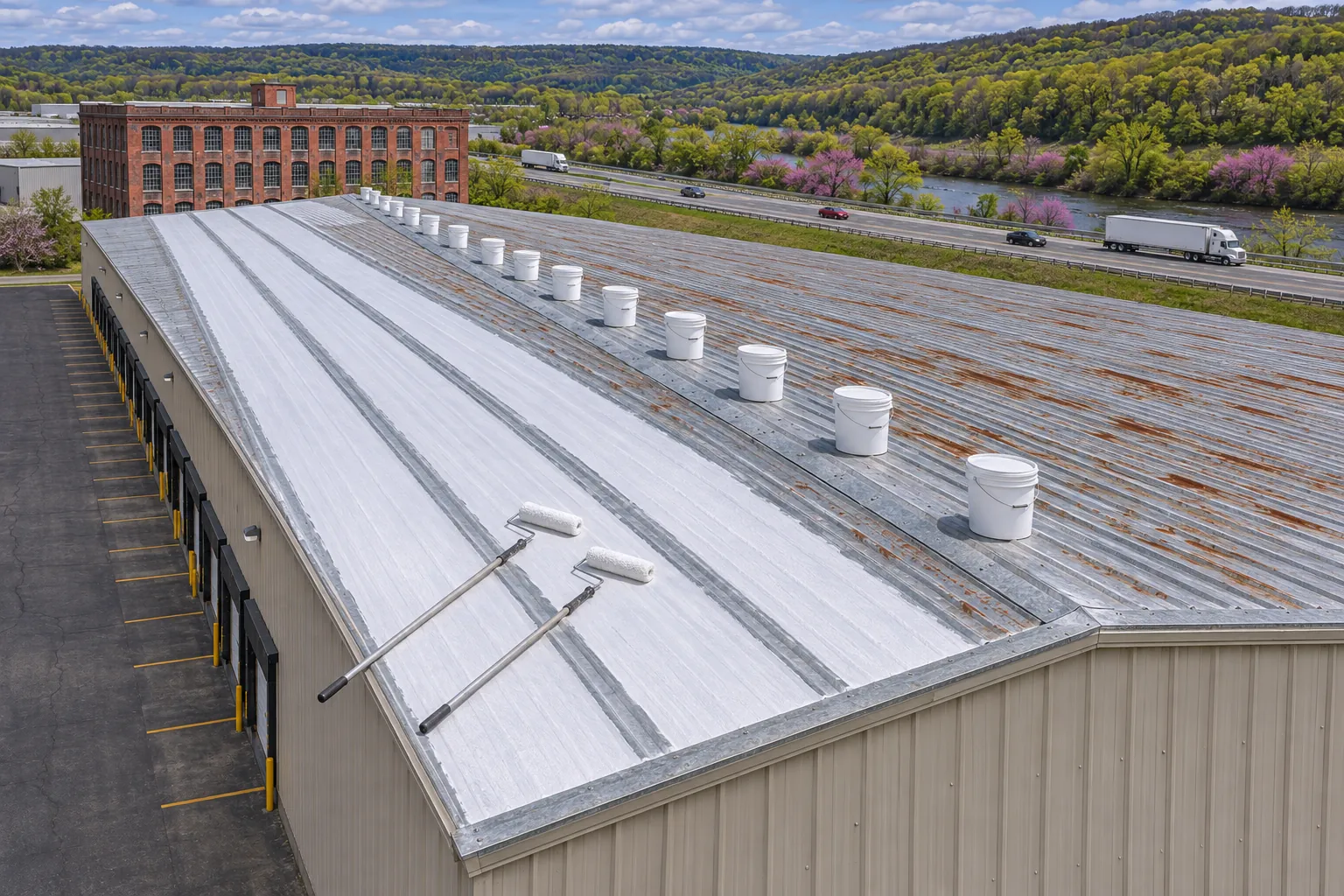
Often. A warehouse can take a metal system on its pitched roof and silicone on a flat office section, as long as the joint between the two roofs is detailed carefully.
Each section gets its own preparation, and the scope shows where one system ends and the other begins. Joints between systems get fabric reinforcement.
Does The Cheapest Coating Make Sense?
Only when it fits the roof. Price per coat matters less than drainage, the old surface, and future recoats, since a mismatched system fails early and costs more to fix.
The planning range for coating runs about $2.50 to $4.00 per square foot, with replacement closer to $5 to $8. Seam and rust work move a roof within that range.
When Is Foam Worth The Extra Cost?
When the building also needs insulation, or a flat roof needs reshaping to drain. Brick mills and plants with thin insulation are the usual candidates. Otherwise a coating alone covers the need, and the extra foam thickness adds cost without a matching benefit.
Moisture readings decide whether foam can go on at all.
Why Are Shingle Roofs Handled Separately?
Shingle coating depends on the shingle maker allowing it and the shingles still being flexible, which is a different check from any metal or flat roof. Many shingle sections end up on a repair or replacement list, and we say so plainly in the report.
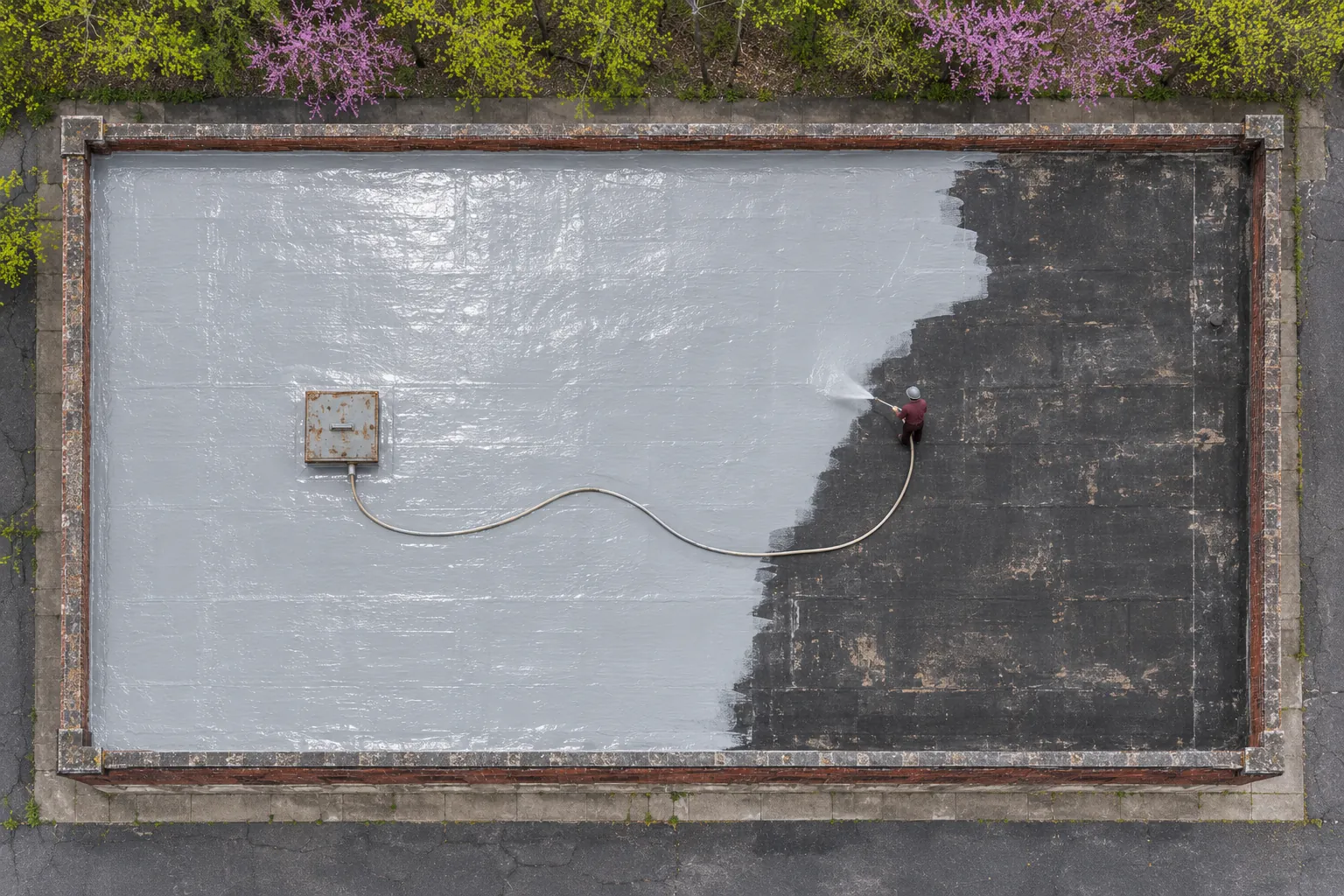
Flat roofs behind shingle faces are coated with their own system.
What Comes First On A Rusted Metal Roof?
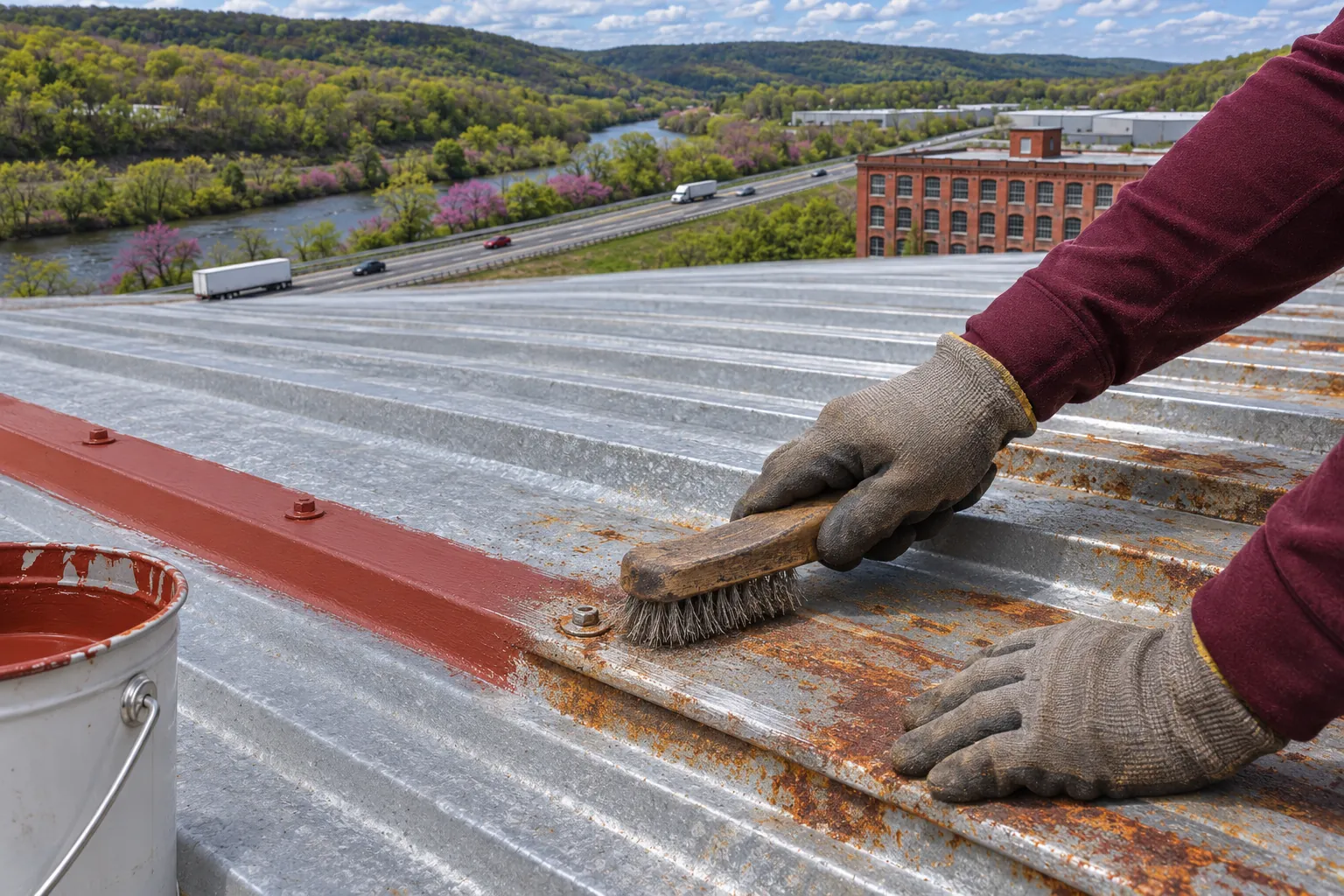
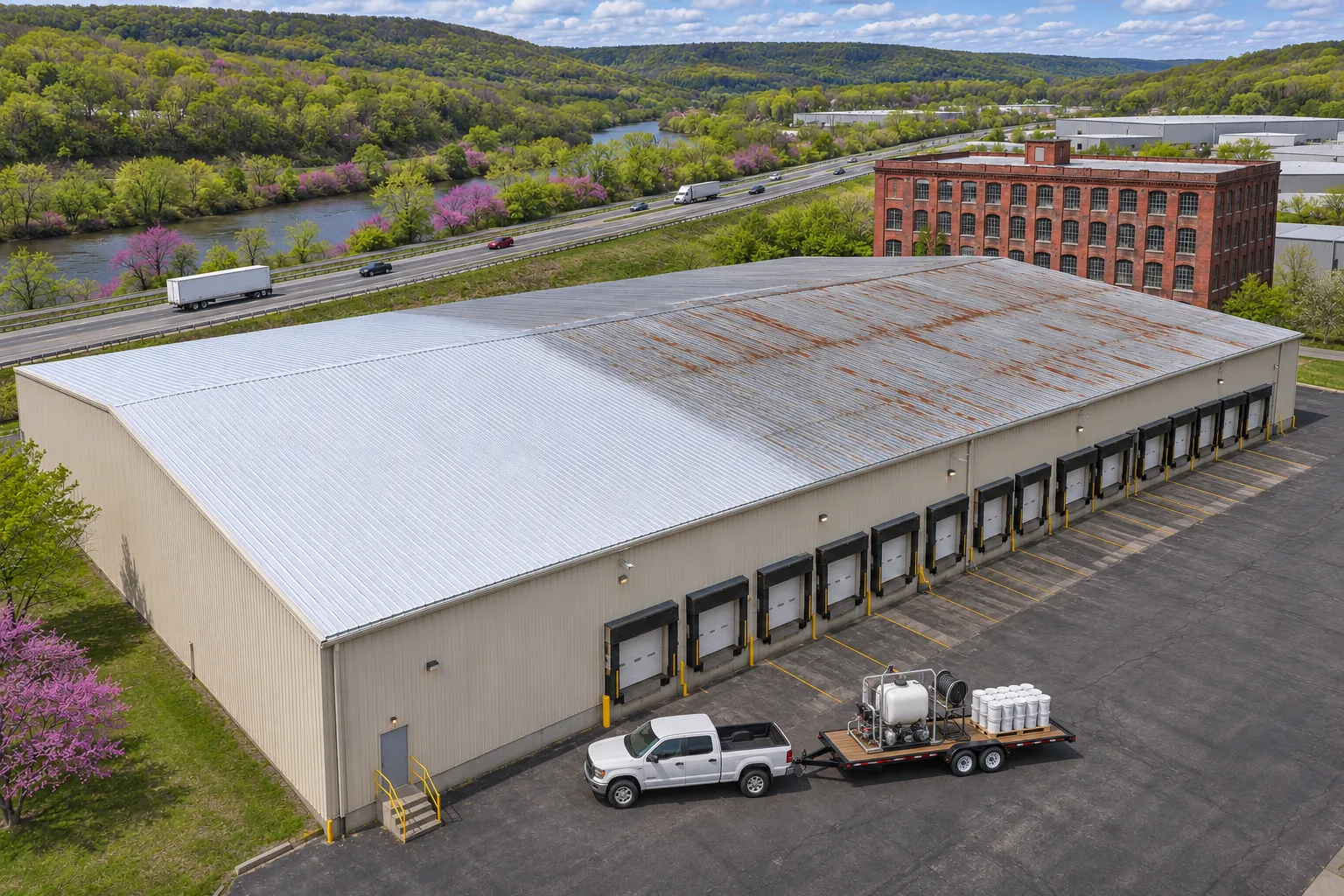
Screws and laps. Loose fasteners are replaced, open laps are resealed, and rusted spots are brushed and primed before any coating system is chosen. Those repairs are the same whether the finish ends up silicone, acrylic, or a full metal coating.
Rust that has gone through the steel means panel replacement first.
When Can Coating Work Happen Here?
Late spring through early fall gives most coatings the dry, mild days they need. Silicone tolerates cooler days better than acrylic, and foam needs low wind. Repairs to screws, laps, and flashing can often happen earlier in the year, on dry days.
Inspections can happen year-round when the roof is safe to walk.

Book Metal Roof Coating Services in Scranton
Get a ballpark range from your roof size, or call to schedule an inspection and a system recommendation. The written scope names every repair before any coating is priced.