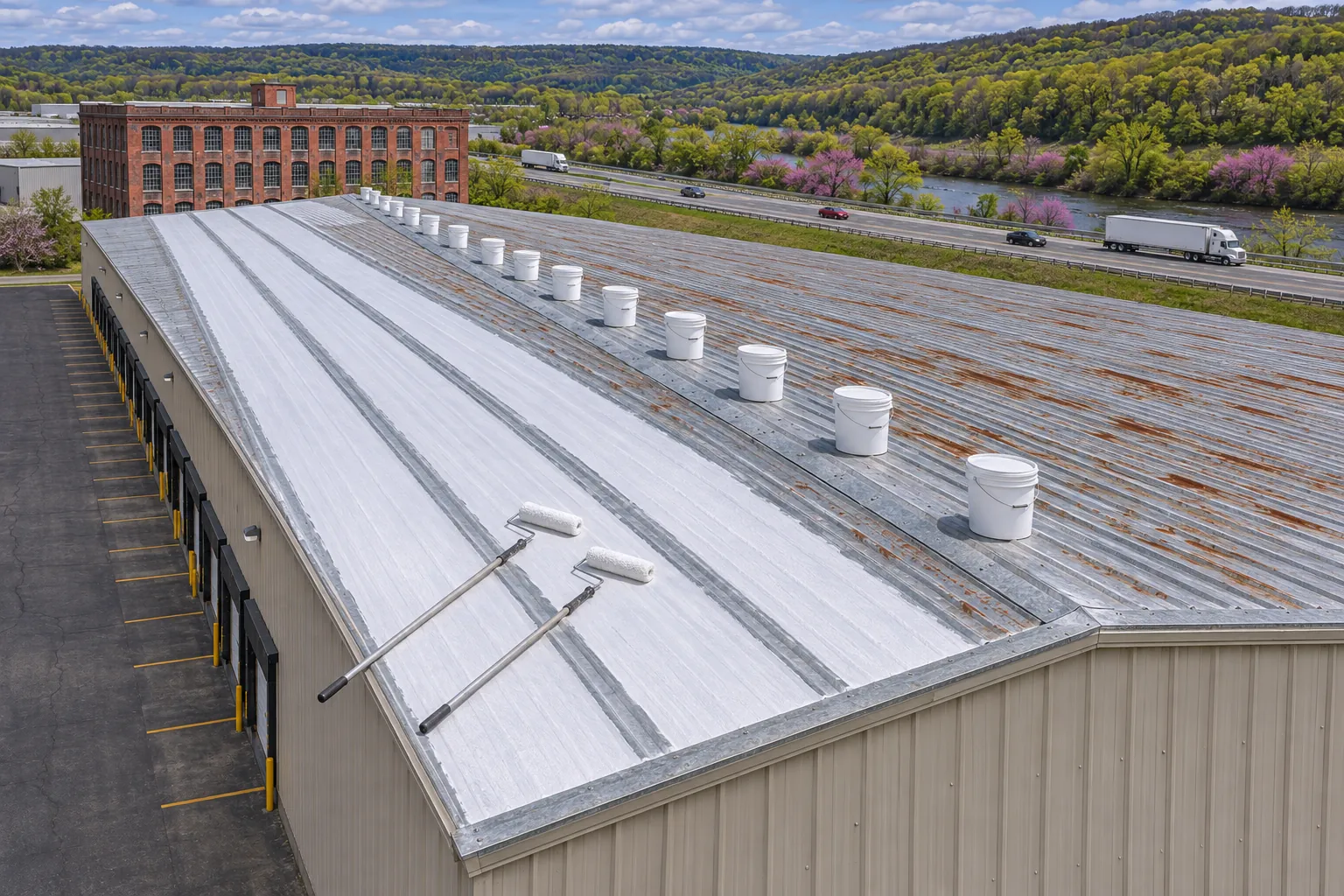
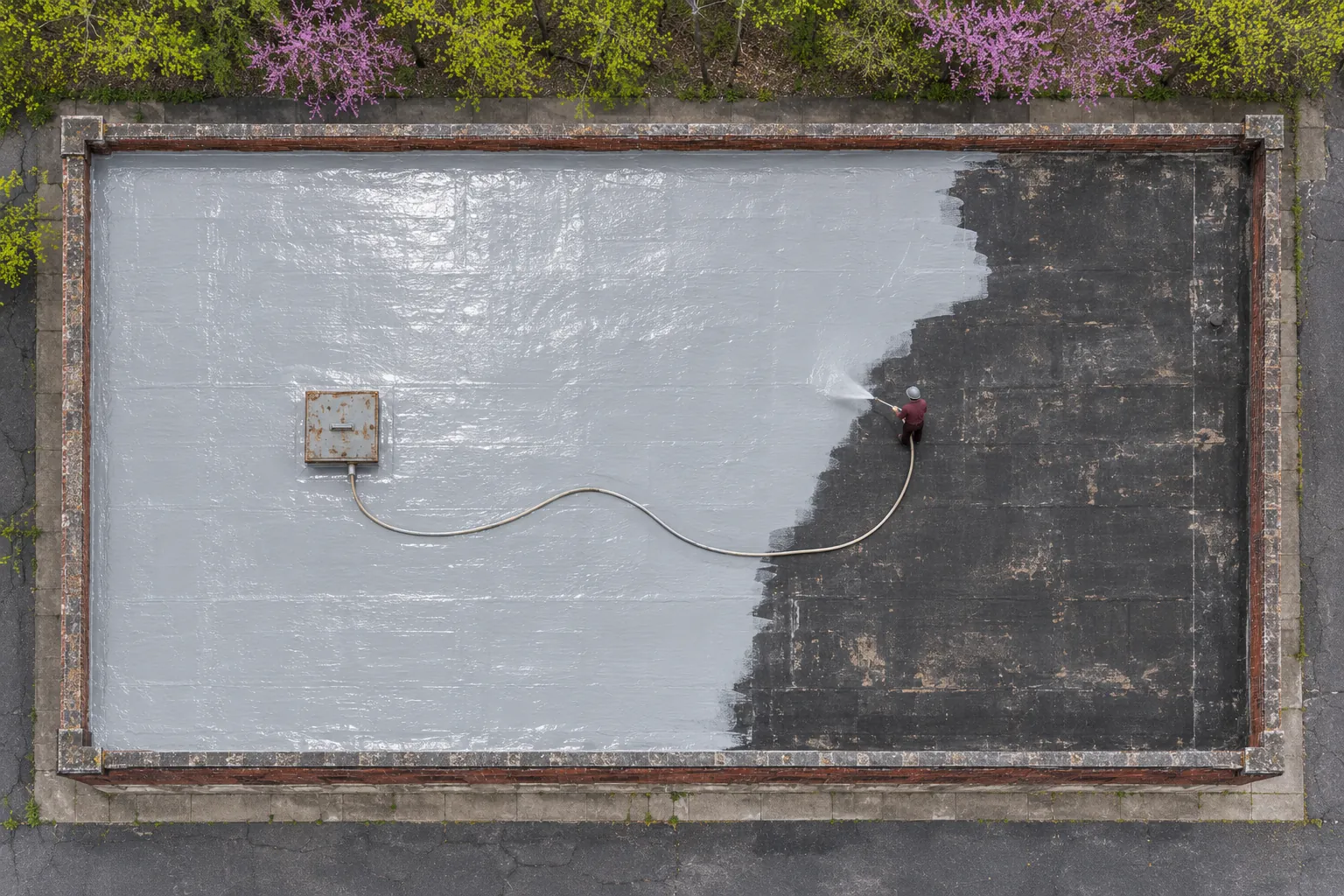
Top-down view of a parapet-walled flat roof half covered in gray silicone coating around a rooftop unit
Low-Slope Roofs

Scranton Silicone Roof Coating Contractor

Protect Low-Slope Roofs Where Water Sits After A Storm

As a Scranton silicone roof coating contractor, we check drainage, test primers, and reinforce seams before applying silicone to low-slope metal and flat commercial roofs.

  • Drainage Checked First
  • Adhesion Test Before Coating
  • Surface Temperature Logged

Is Scranton Silicone Roof Coating Right For This Roof?

Scranton silicone roof coating suits roofs that drain slowly in places but stay dry underneath. These details show when a roof is ready and when it needs work first.

Roof DetailReady To CoatRepair FirstReplace Instead
Standing WaterShallow spots that dry within daysLow areas from a sagging deckDeck failure holding deep water
Membrane Or PanelsFirm surface, no soft spotsBlisters or open seams to cut and patchMembrane shrunk away from edges
Insulation BelowDry readings across the roofA few wet sections to cut outWet readings over most of the field
Old CoatingsEarlier silicone or bare surfaceAcrylic that needs a primer testLoose layers peeling across the field
Drains And ScuppersClear outlets at low pointsStrainers missing or outlets cloggedNo path for water to leave

Silicone Roof Coating Problems on Scranton Roofs

Silicone handles water better than most coatings, but these conditions still come up on the roofs we price.

You Notice

Silicone Coating Over Ponding Water

Likely Cause

A sagging deck section or a clogged outlet leaves a shallow pond that never fully dries between storms.

What We Do

We clear outlets, check the deck, and apply silicone at full thickness through the low areas once the surface is dry.
You Notice

Silicone Roof Coating In Cold Weather

Likely Cause

Short fall days and frost on shaded sections leave less time for the surface to dry and the coating to cure.

What We Do

Surface temperature and dew point get logged before each pass, and shaded sections wait until frost and dew are gone.

You Notice

Open Seams Under An Old Coating

Likely Cause

Earlier repairs bridged seams with thin coating that cracked when the roof moved through winter.

What We Do

Cracked material is cut back, seams are reinforced with fabric or tape, and the new silicone carries across them.

You Notice

Dirt Film On An Older Silicone Roof

Likely Cause

Silicone collects airborne dirt, which dulls the surface and hides small cuts from foot traffic.

What We Do

The roof is cleaned with the right wash, cuts are repaired with compatible silicone, and a recoat goes on if the film has thinned.

Commercial Roof Coating Options for Scranton

Silicone goes on several roof types here. These are the jobs we see most, plus a cost note for planning.

Metal Panels

Silicone Over Low-Slope Metal

Shallow-pitch metal buildings that hold water at end laps take silicone well once screws are sealed and rust is primed.

Single-Ply

Silicone Over Aged Membrane

Firm, dry EPDM or TPO with open seams can be cleaned, primed, seam-reinforced, and coated without tearing the membrane off.

Cost Per Sq Ft

Silicone Roof Coating Cost

Coating plans out at about $2.50 to $4.00 per square foot of roof, against about $5 to $8 to replace. Seam work, thickness, coats, and access set where a roof lands.

Problem Spots

Silicone Over Ponding Areas

Areas that stay wet after a storm get extra thickness, and outlets are cleared so water still has a way off the roof.

Benefits of Coating Your Roof

Silicone keeps working where water lingers, which matters on flat roofs that drain slowly in a wet spring.

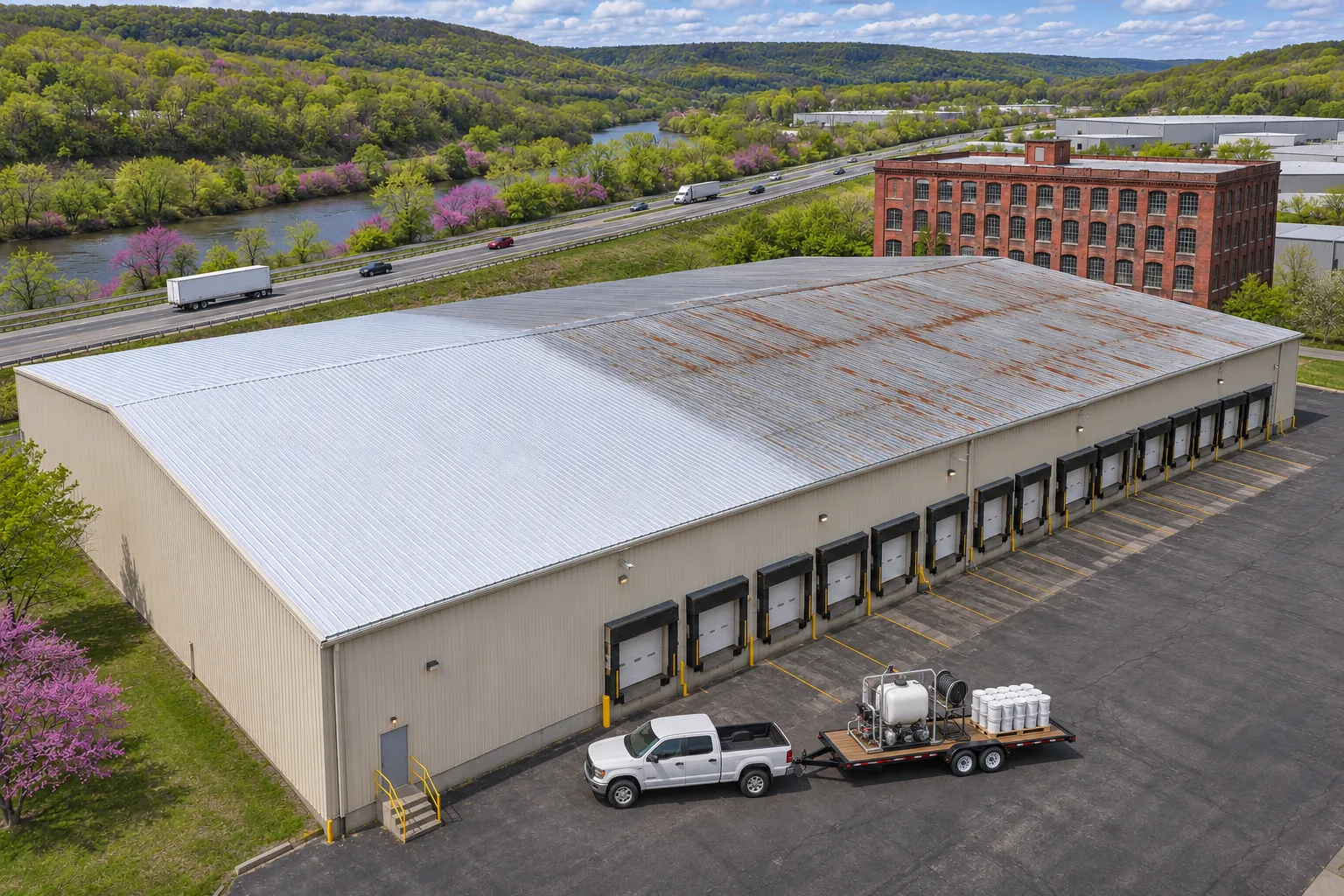
Plain white pickup towing a coating rig beside a metal warehouse with a half-coated roof
  • Holds Up Where Water Sits

    Silicone resists breakdown from standing water better than water-based coatings, so slow-draining sections stay protected between storms.

  • Seals Over Firm Membrane

    Open seams and small cracks in a firm membrane are closed under one continuous layer instead of patch after patch.

  • Thick Film In Fewer Passes

    High-solids silicone builds thickness quickly, so many roofs need one heavy pass plus detail work at seams.

  • Reflects Summer Sun

    Light-colored silicone reflects heat that dark membrane absorbs, keeping the roof surface cooler on clear days.

Water Standing On Your Roof?

Call us about the spots that stay wet after rain. We will check the outlets and the deck before silicone is part of the plan.

How Silicone Roof Coating Goes On in Scranton

Silicone needs a dry, clean surface and the right primer. These four steps get the roof there.

  1. Step 1

    Inspect Your Roof

    We walk the field after rain to see where water stays, take moisture readings, cut test spots where readings are high, and note every seam and outlet.

  2. Step 2

    Repair And Clear

    Wet insulation is cut out and replaced, outlets are cleared, and open seams are reinforced so the silicone has a firm, dry base.

  3. Step 3

    Wash And Test

    The roof is cleaned, and a small primer-and-silicone patch shows whether the coating grips the old surface before the full job.

  4. Step 4

    Apply At Thickness

    Silicone goes on at the specified thickness, with extra through low spots and seams, and readings confirm each section before moving on.

Compare Silicone With Other Coatings

Owners weighing silicone usually look at these systems too.

Silicone Roof Coating Questions in Scranton

Straight answers about silicone on commercial roofs.

Upkeep

Downsides Of Silicone Roof Coating

The biggest ones are upkeep and repairs. Silicone picks up dirt, turns slick when wet, and accepts only silicone for later coats. We check drainage and the existing materials first, since the coating leaves slope and wet layers underneath unchanged.

Cold Weather

What Matters For Silicone Work In Cold Weather?

Metal temperature and cure time matter more than the air forecast. We look at shaded sections for frost, dew, and trapped moisture, and schedule work so preparation and curing both fit inside a dry window.

Pricing

Which Roof Details Change A Silicone Price?

Silicone is priced on the prepared roof. Plan on about $2.50 to $4.00 per square foot to coat against about $5 to $8 to replace, then adjust for size, access, rust and seam work, fasteners, thickness, coats, penetrations, and flashing.

Recoating

Can Silicone Be Recoated Later?

Yes, with more silicone after a thorough clean. Acrylic and most other coatings do not grip cured silicone, so the first system choice also sets what future maintenance coats look like.

Ponding

How Deep Can Water Sit On A Silicone Roof?

Silicone tolerates shallow water that clears within a couple of days. Deep ponds from a sagging deck point to a structural or drainage problem, and those are fixed first because the coating leaves the slope as it is.

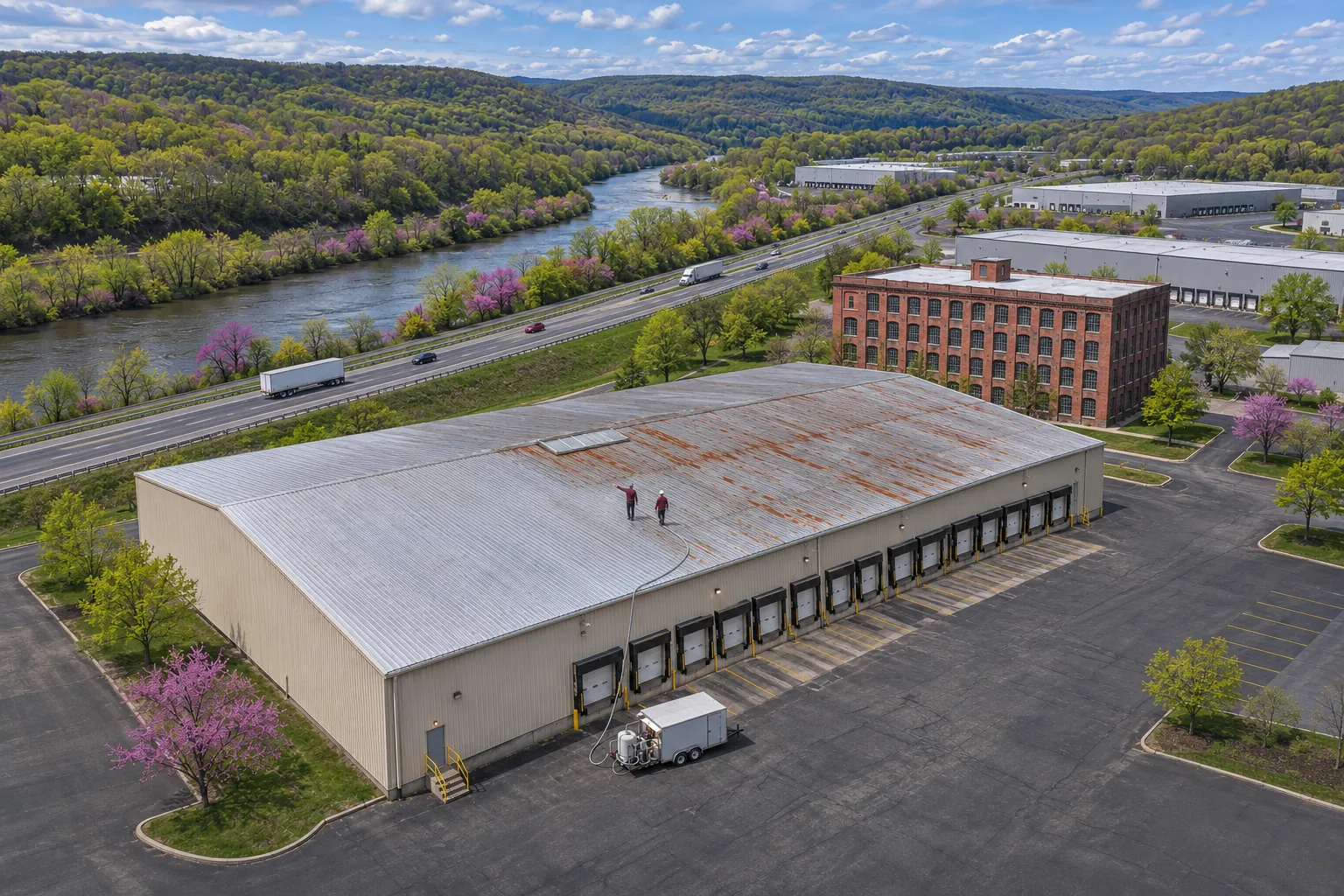
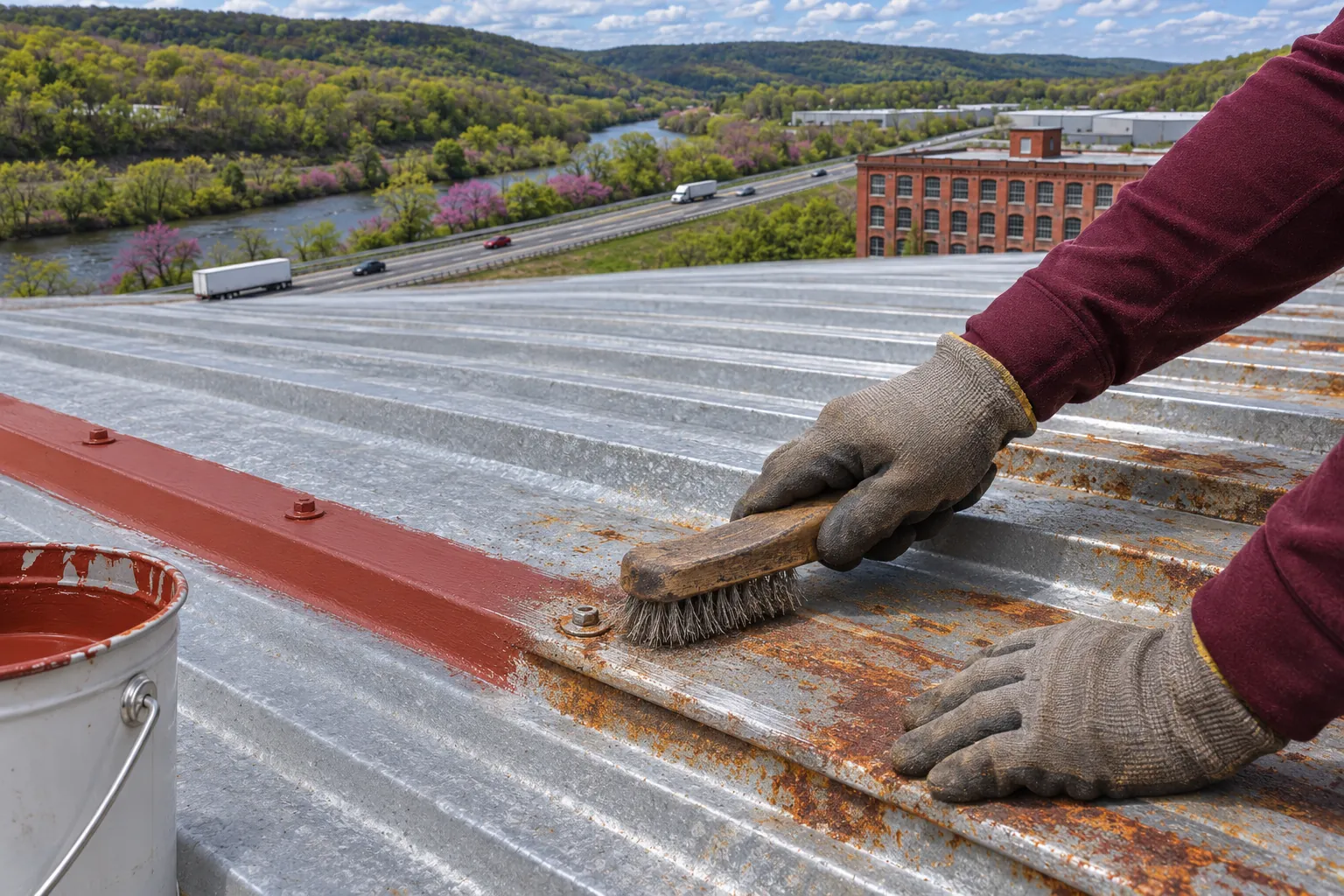
Rust-streaked metal warehouse roof in a river valley with two people walking the panels

Hire a Scranton Silicone Roof Coating Contractor

Get a ballpark range for your roof size, or call to have the wet spots and seams checked in person.

Call Us(570) 816-4569