Dunmore metal roof coating jobs often start on warehouse roofs that carry years of seam repairs: caulk over caulk, mastic smeared across laps, and tape that has curled at the edges. Some of those patches still grip the steel. Others only look attached.
We find out which is which before any new coating depends on them.
Pull tests on old sealant and mastic at each lap
Loose or incompatible patch material scraped back to steel
Firm repairs kept and primed to match the new system
Lap movement checked where patches keep failing
Metal Roof Coating Problems on Dunmore Warehouses
Patched seams create their own set of problems. These are the ones we sort out first.
You Notice
Caulk Cracking Along The Laps
Likely Cause
Rigid caulk was used on laps that move with every temperature swing, so it split along the seam.
What We Do
Cracked caulk is cut out, the lap is cleaned, and a flexible sealant or tape that matches the coating goes in.
You Notice
Mastic Lifting Off The Steel
Likely Cause
Asphalt mastic was spread over rust or dirt and never gripped the panel underneath.
What We Do
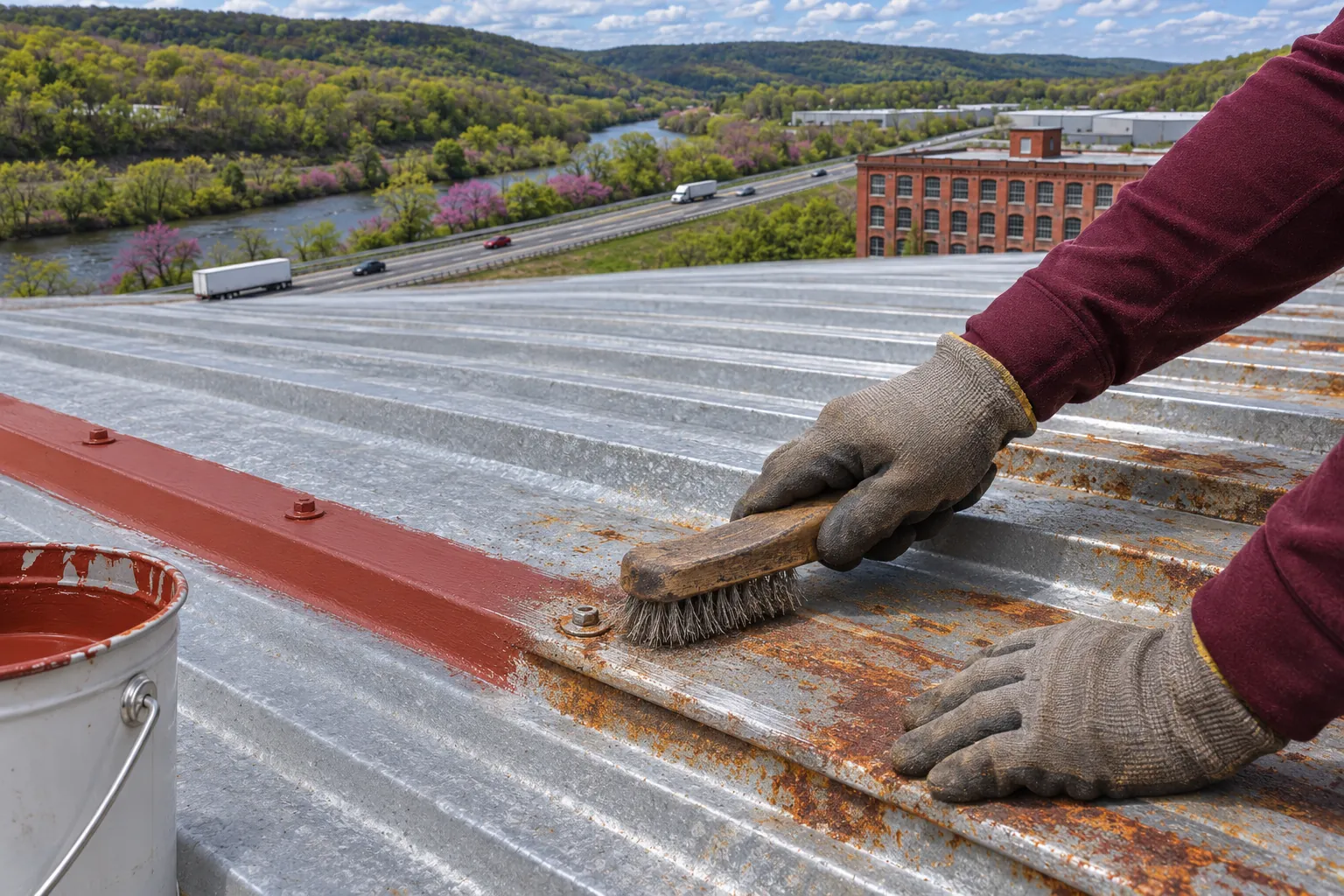
Loose mastic is scraped off, rust is brushed and primed, and the lap is resealed with a compatible product.
You Notice
Leaks Returning Beside A Patch
Likely Cause
Water is entering at a fastener or lap next to the old repair, which was never the real source.
What We Do
We trace stains inside to the roof above and fix the actual entry point before the area is coated.
You Notice
Several Patch Layers Stacked Up
Likely Cause
Each new leak got another layer, and the stack now traps water between coats.
What We Do
The stack is removed to firm material so the coating sits on one clean, attached surface.
You Notice
Screw Holes Hidden Under Old Mastic
Likely Cause
Fasteners were buried under mastic years ago, so nobody has seen whether they are still tight.
What We Do
Mastic is removed around each fastener line so screws can be checked, replaced if loose, and sealed properly.
Benefits of Coating Your Roof
Coating a Dunmore warehouse roof after the seams are sorted out turns scattered patches into one surface.
One Surface Over The Laps
Firm old repairs and new sealant end up under one continuous coating instead of a patchwork. Later inspections then check one surface instead of dozens of separate repairs.
Docks Stay Open
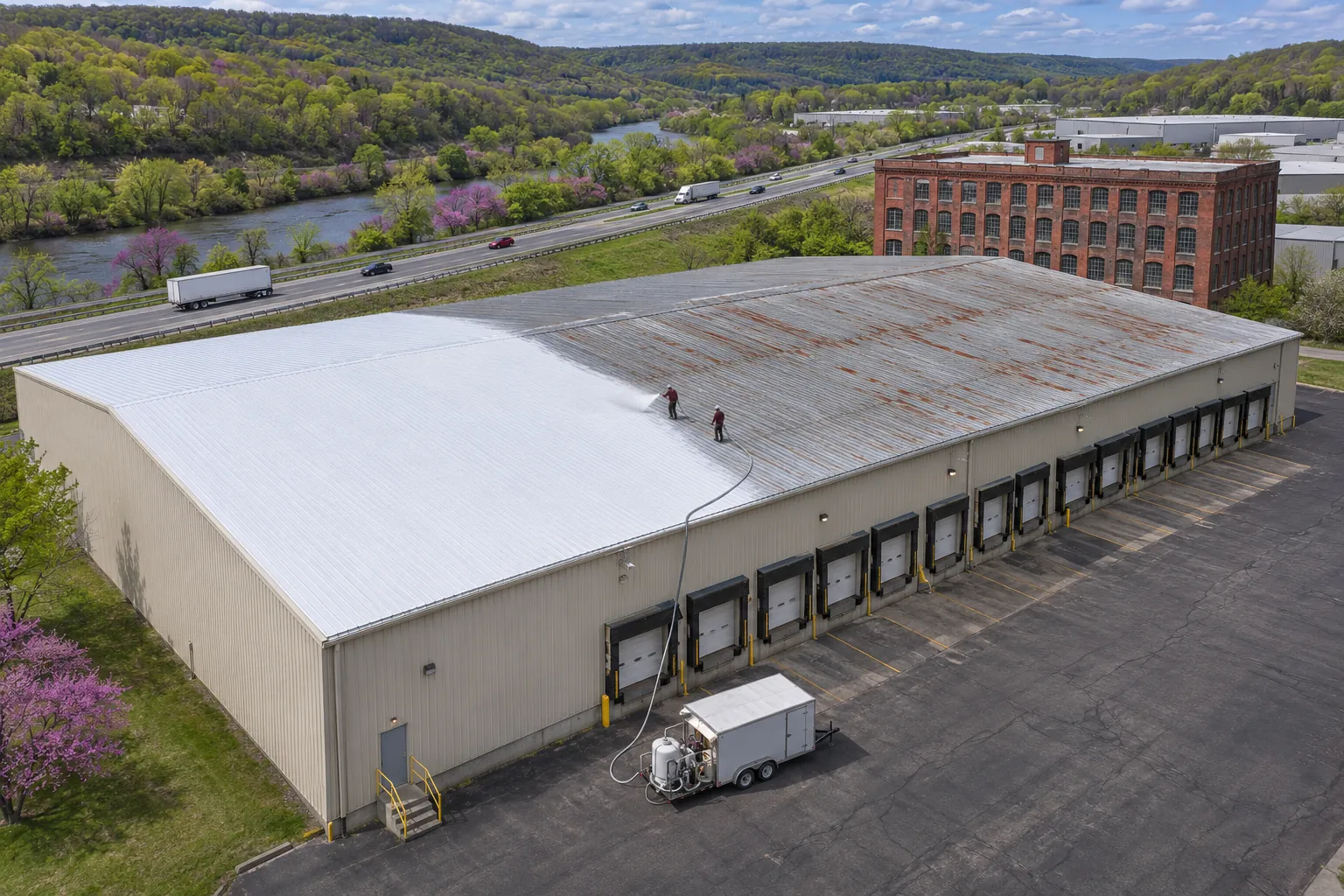
Coating goes on section by section, so loading doors under the work area can keep running. Truck traffic shifts to finished bays as the work moves across the roof.
Rust Slowed At The Seams
Primed laps and sealed screws keep water off the steel where warehouse roofs rust first. Laps that leaked for years finally get a matched, flexible seal.
Lower Interior Heat
A white finish reflects summer sun that bare steel absorbs over stored goods. Stored goods near the roof deck stay cooler through July and August.
Commercial Roof Coating Options for Dunmore
Dunmore warehouse roofs usually fall into one of these coating paths.
Exposed Fastener
Full Metal Coating With Seam Repair
Through-fastened warehouse roofs get screws sealed, laps rebuilt where patches failed, and two coats over the field. Bays are scheduled around the dock calendar.
Slow Drainage
Silicone Where Water Sits
Low-slope sections that hold water at the end laps take silicone after the outlets are cleared. Outlets are cleared before any coating goes on.
Planning Figures
Dunmore Metal Roof Coating Cost
Coating plans at about $2.50 to $4.00 per square foot against about $5 to $8 to replace, and patch removal adds labor. Patch removal is listed as its own line.
Local Businesses
Metal Roof Coating For Dunmore Businesses
Shops, offices, and storage buildings with metal roofs get the same seam testing as larger warehouses. Smaller roofs often finish in a few working days.
Patch Over Patch On Your Roof?
Call us about the seams that keep getting repaired. We will check which patches still hold before quoting a coating.
On patched roofs, the inspection and seam work take as much care as the coating itself.
Step 1
Inspect Your Roof
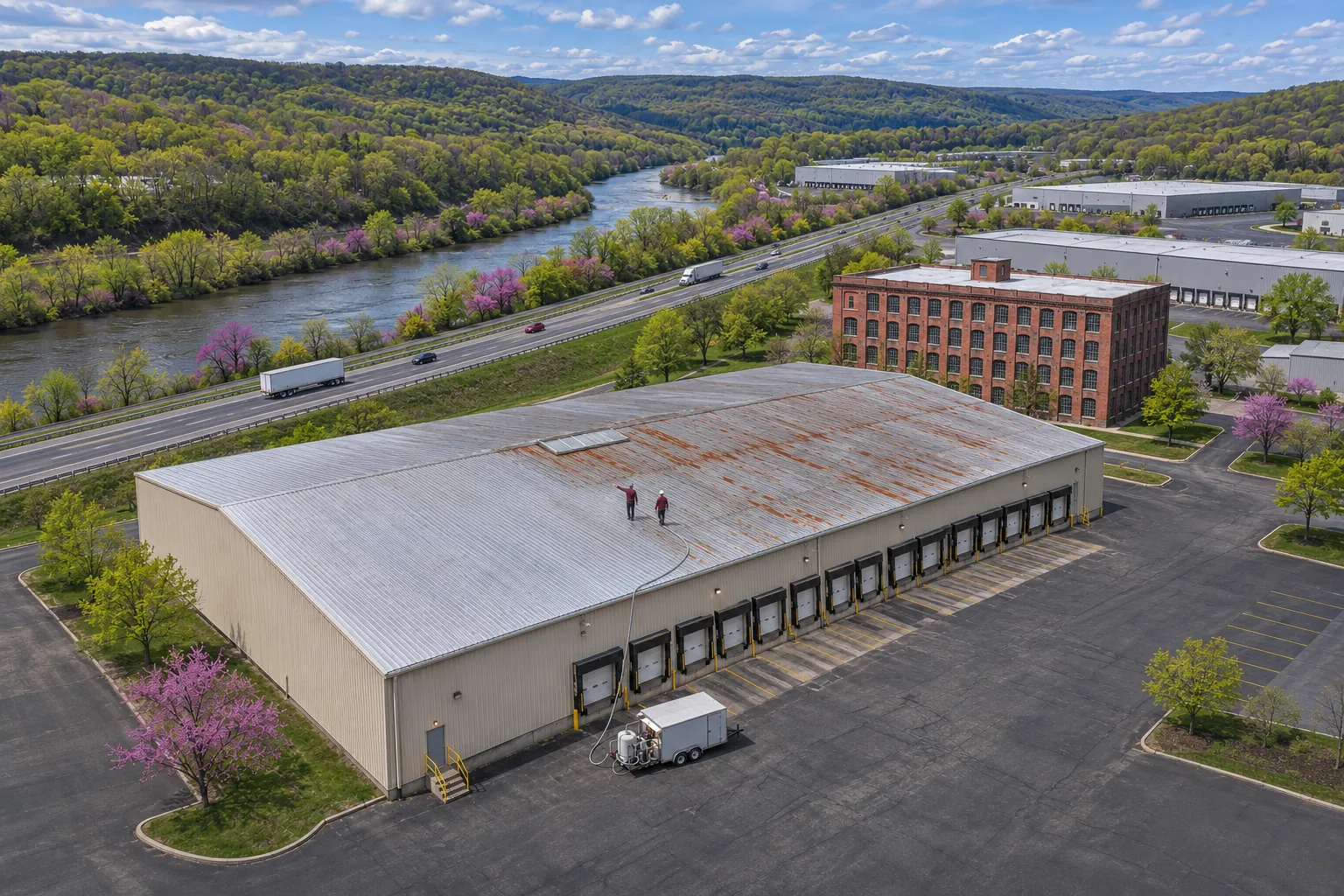
We map every old repair, pull-test sealant and mastic, and line up stains inside with the laps above them. Each repair gets a note in the written scope.
Step 2
Strip And Rebuild Laps
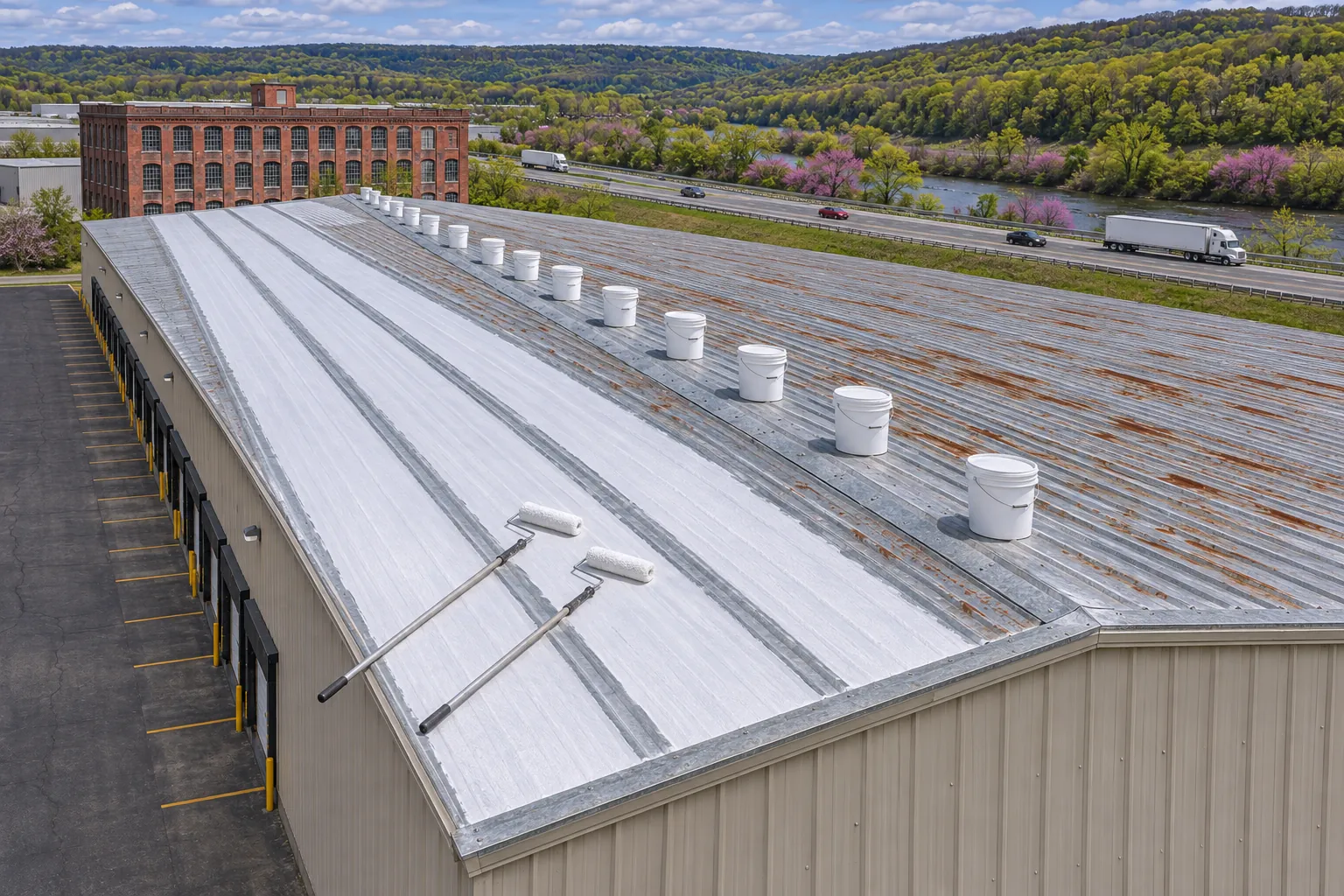
Loose patch material comes off, rust is primed, and laps are resealed with products that match the coating. Products are matched to the coating maker guidance.
Step 3
Seal Every Screw
Fasteners near the old repairs are tightened or replaced, since many patch failures started at a screw. Washers are replaced along with any worn screws.
Step 4
Coat In Sections
The field is coated bay by bay around dock schedules, with extra material across each rebuilt lap. Wet-film readings confirm thickness as each bay is finished.
Peeling coatings traced to the cause before recoating.
Metal Roof Coating Questions From Dunmore
Answers for Dunmore building owners.
Old Seams
Can A Dunmore Warehouse Keep Its Old Repaired Seams?
Some can stay. We check bond and movement at each repaired seam, look at the metal beside it, and remove incompatible or loose material. A repair stays only when it is still attached and suits the new system.
Firm repairs are cleaned and primed so the new coating bonds to them the same way it bonds to bare steel.
Local Search
Who Handles Dunmore Metal Roof Coating Near Me?
We do. Dunmore is one of the five towns we cover from Scranton, and the inspection, repair, and coating steps are the same as on any roof we take on.
Inspections are booked like any other job in our area, and the written scope lists each seam that needs work.
Cost
What Drives Dunmore Metal Roof Coating Cost?
Seam work drives it most on patched roofs. The planning range runs about $2.50 to $4.00 per square foot, and removing stacked patches, priming laps, and access around docks move a roof within it.
A roof with only a few patched laps sits lower in the range than one with stacked repairs on every seam.
Timing
When Is The Best Season To Coat?
Late spring through early fall gives the dry, mild days most coatings need. Seam repairs can happen earlier, as long as the surface is dry when sealant goes on. Cold-weather seam work uses sealants rated for low temperatures, applied only to dry, frost-free laps.
Operations
Can Trucks Keep Using The Docks?
Yes. We coat in sections and keep work away from the doors in use, moving across the roof as each bay is finished. Each bay is marked off during coating, and wet sections are kept clear of foot traffic until they cure.
Patches
How Many Old Patches Usually Come Off?
It varies roof to roof. Rigid caulk and mastic spread over rust almost always come off, while tape and sealant that pass a pull test can stay.
The inspection report shows each lap and what happens to it, so the scope is clear before work starts.
Hire a Dunmore Metal Roof Coating Contractor
Get a ballpark range for your Dunmore roof, or call to have the old seam repairs tested.