
You Notice
Leaks Below A Gravity Vent
Likely Cause
The base flashing has loosened and the old sealant has shrunk away from the vent collar.
What We Do
We refasten the flange, replace the sealant, and reinforce the joint with fabric in the coating.
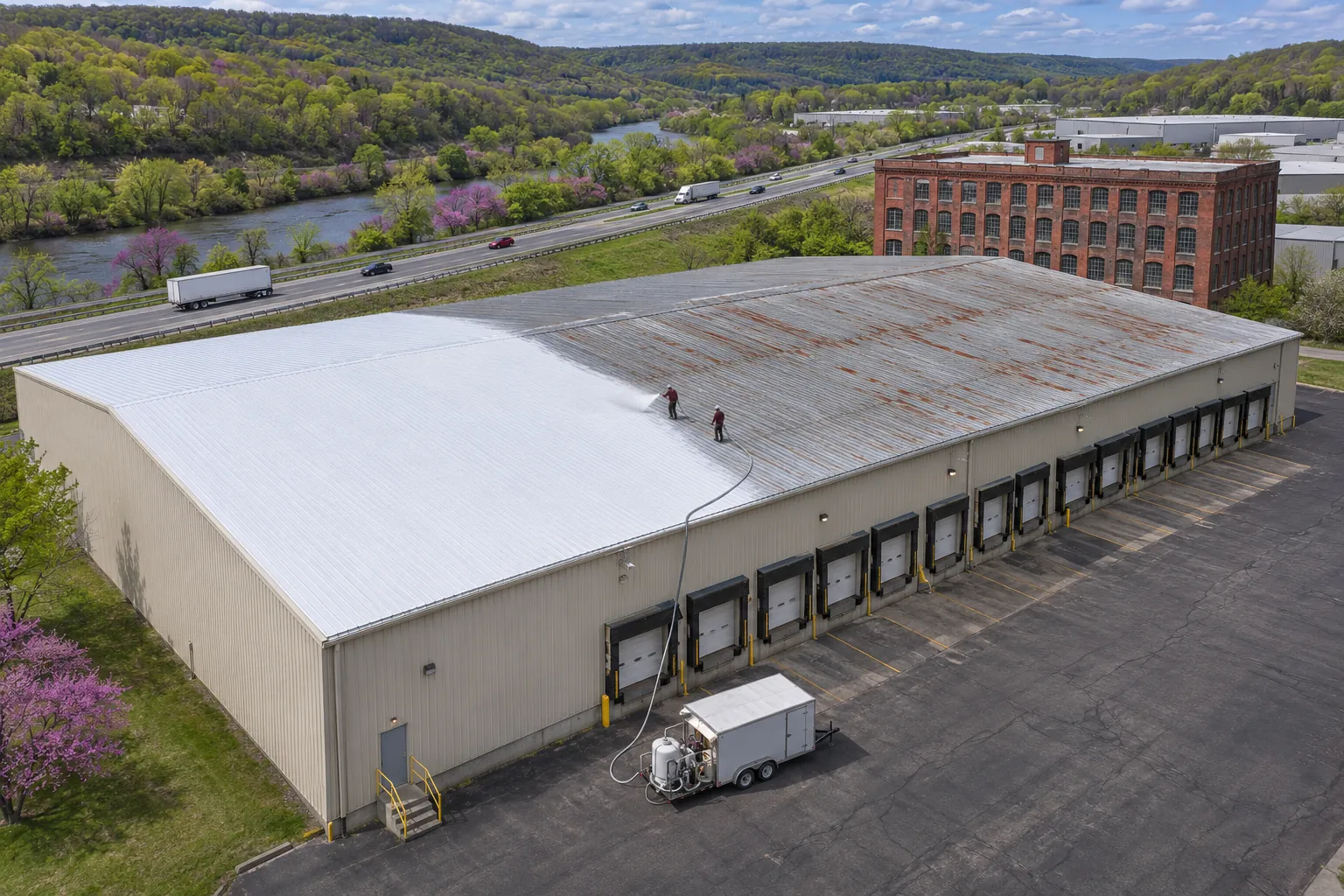
As an Old Forge metal roof coating contractor, we rebuild the flashing at vents, fans, and curbs before coating, so every roof opening is sealed and still serviceable.
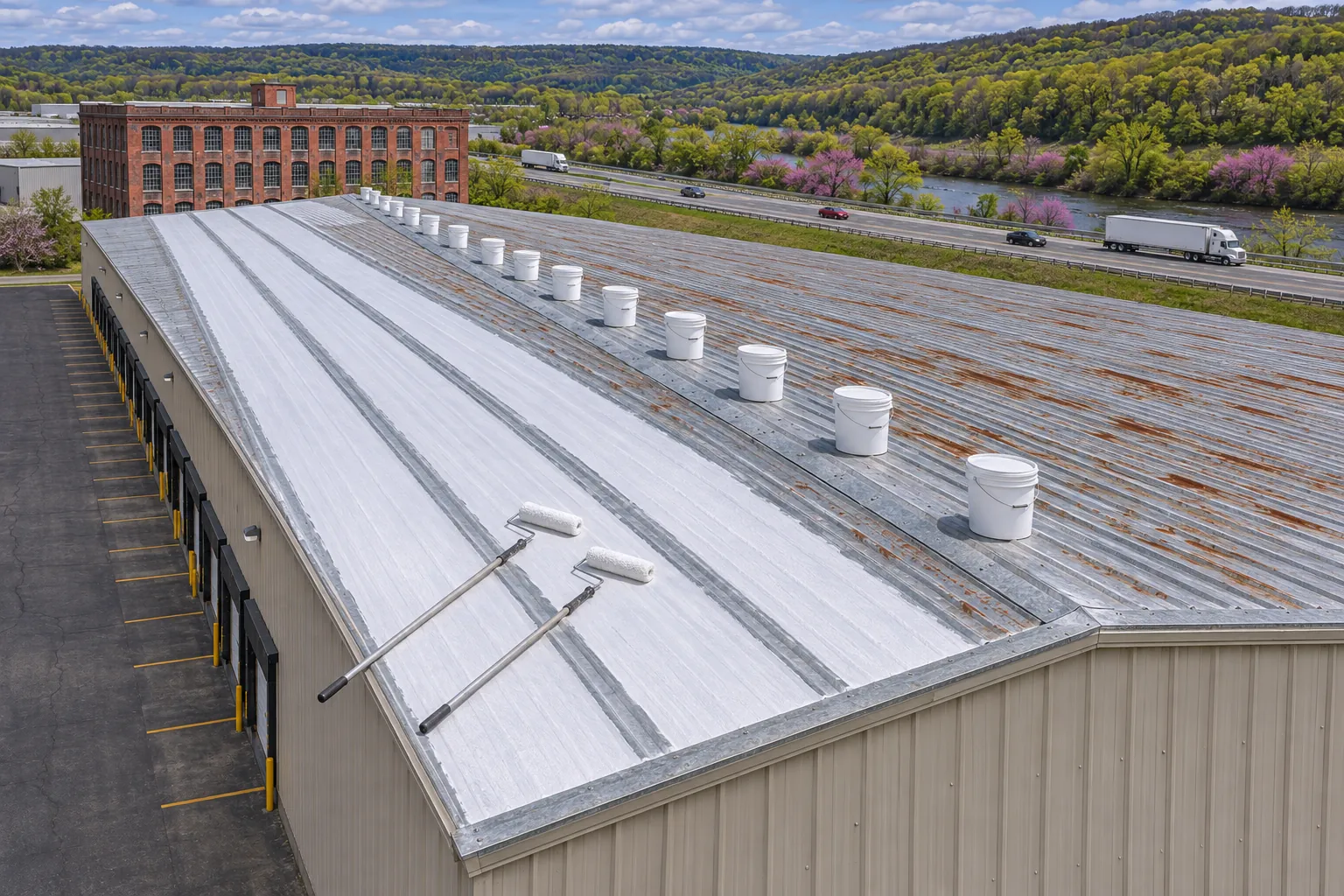
Old Forge metal roof coating work often centers on what sticks up through the roof. Restaurants, shops, and small plants run exhaust fans, gravity vents, and pipe boots that leak long before the panels do. Each one gets its own flashing work, sized to how it moves and how it is serviced.
Penetrations cause most leaks we trace on these buildings. These are the common ones.
The base flashing has loosened and the old sealant has shrunk away from the vent collar.
We refasten the flange, replace the sealant, and reinforce the joint with fabric in the coating.
Cooking or process exhaust has coated the roof, and many coatings will not stick to it.
Residue is cleaned with the right degreaser, an adhesion test confirms the surface, and a grease containment check is noted for the owner.
Water pools on the uphill side of the curb and holds against the steel.
Rusted curb flashing is replaced or primed, and extra coating goes on where water collects.
Rubber boots harden and split in sun and cold, opening a gap around the pipe.
Split boots are replaced with new ones sized to the pipe before coating is brought up around them.
Service techs cross the same panels to reach fans and units, wearing the finish and loosening screws.
Screws along the path are reset, and a walk pad or extra coating thickness protects the path to each unit.
Coating an Old Forge roof after the openings are fixed seals the places where leaks start.
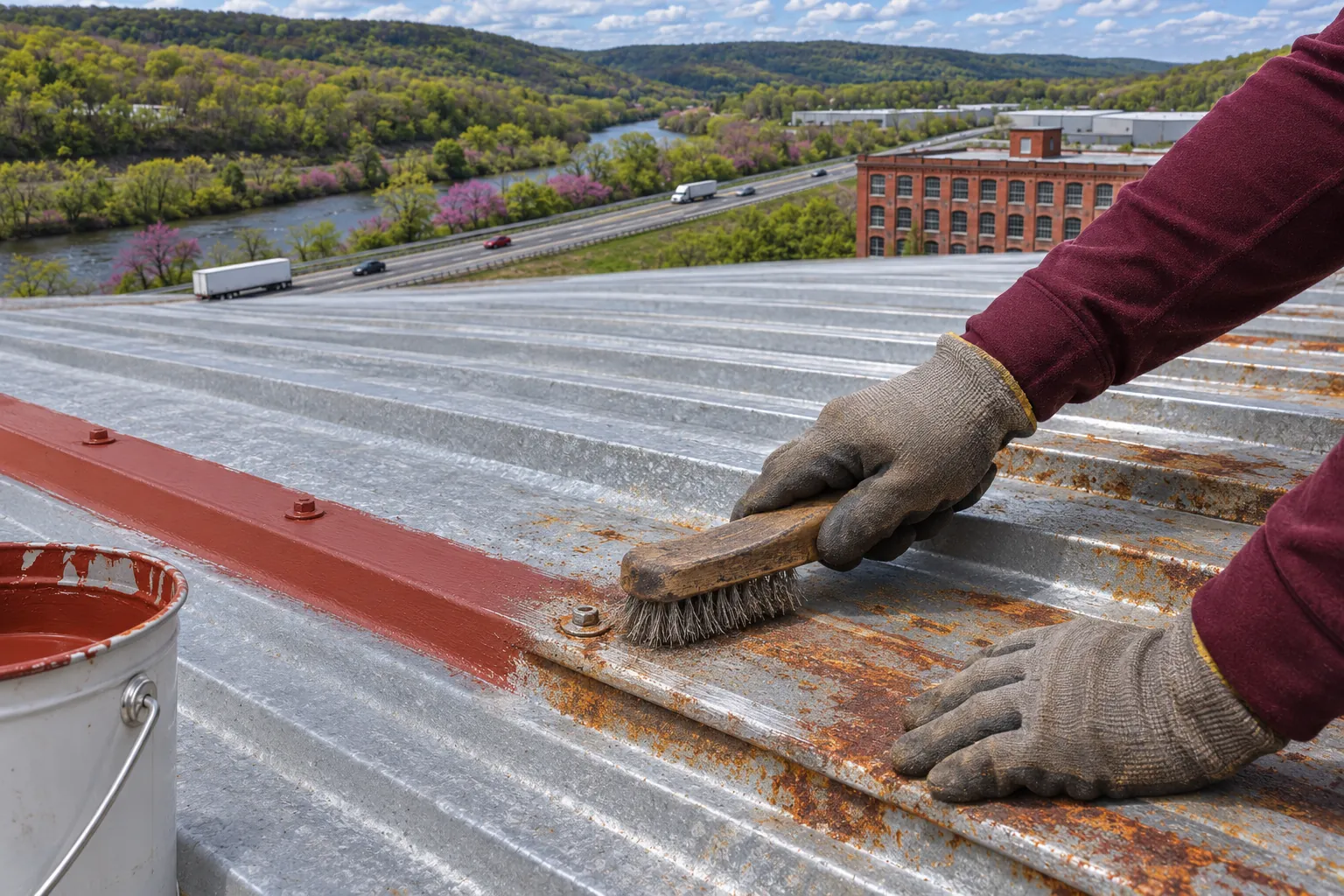
Reinforced coating at each curb and boot closes the joints where most of these leaks began. Rooftop service visits leave the seal intact around each unit.
Flashing details are built so fans and units can be opened and maintained without tearing the seal. Service techs can open panels without cutting into coated flashing.
The rest of the roof gets primed and coated, slowing rust on the open panels. Open panels between units keep their own primer and topcoat.
Removing exhaust residue during prep leaves a surface that is easier to inspect later. Fresh stains near an opening are easier to spot on a clean, light roof.
Roofs with lots of equipment in Old Forge usually take one of these approaches.
Every opening gets new flashing and fabric, then the whole roof is coated at specified thickness. Each curb gets fabric in the base coat.
Flat areas where water sits around curbs take silicone at extra thickness. Outlets near the curbs are cleared first.
Old Forge is a regular stop for us, close to Scranton, with the same inspection process. The scope lists every opening by type.
Plan on about $2.50 to $4.00 per square foot to coat versus about $5 to $8 to replace, with more penetrations adding detail work. Busy roofs with many fans land higher in the range.
Call us about the opening that keeps leaking. We will check its flashing, seal, and the panels around it.
Penetration work fits into the same four steps as every roof we coat.
We list every vent, fan, boot, and curb, check each seal, and note residue and how each unit is serviced. Each opening gets a line in the written scope.
Loose flanges are refastened, failed boots and sealant are replaced, and rusted curb metal is repaired. Pipe boots are sized to the pipe they surround.
Exhaust residue is cleaned and test patches confirm the primer and coating will grip. Grease containment is noted for the owner.
Fabric goes into the base coat at every opening, then the field and details are coated to thickness. Walk paths to units are kept clear.
Old Forge is one of five towns we cover around Scranton. Not listed? Call us or send us a message.
Warehouse roofs with decades of seam repairs to test.
Up-valley buildings where moisture under the panels gets checked first.
Equipment roofs where attachment and old finishes decide the plan.
Peeling coatings traced to the cause before recoating.
Answers for Old Forge building owners.
Yes. Each vent is prepared for its flashing, movement, and surrounding surface. We inspect failed seals, corrosion, and exhaust contamination, and keep the finished detail easy to inspect and maintain around the opening. Units are left serviceable, with clear paths to each access panel.
Call us or start a ballpark estimate online. Old Forge is close to Scranton and part of our regular service area. Inspections are scheduled like any job in our area, and every opening is listed in the scope.
It should never go over it. Residue keeps coatings from bonding, so it is cleaned and tested first, and heavy grease output is flagged for the owner. The owner also gets a note when grease output looks heavy enough to need containment.
Rarely. We work around them and coat up to and onto the curb flashing, keeping access panels clear. Curb flashing is coated onto the unit curb so the joint at the base stays sealed.
They add detail labor. Each opening needs flashing, fabric, and extra coating, so a roof with many fans and vents lands higher in the per-square-foot range. Plan on that labor showing up in the per-square-foot figure for busy roofs.
Over time it can. Grease from kitchen exhaust softens many coatings and holds dirt, so the area around the fan is cleaned, tested, and coated with a product that tolerates it, and grease containment at the fan is noted for the owner.
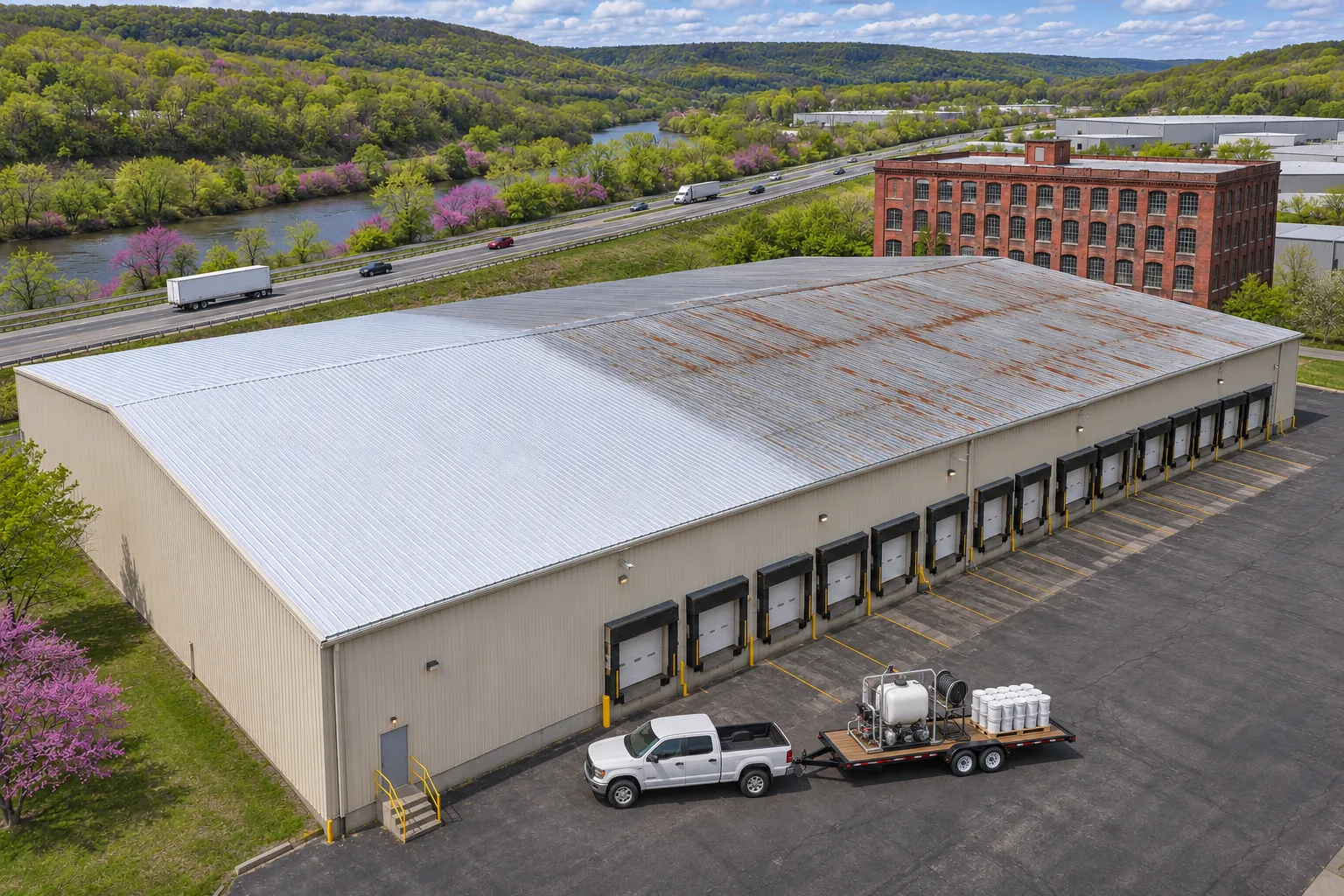
Call to have the vents, fans, and curbs on your Old Forge roof checked, or see a ballpark range online.